Breathing And Nervous Calm
Breathing techniques aim to shift the body from a threat-oriented state toward a more regulated, recovery-oriented state. People often notice this as slower breathing, less muscle tension, and reduced “mental noise” during stressful moments, such as before a meeting, after conflict, or while waiting for test results.
Breathing is tightly linked to the autonomic nervous system, which controls heart rate, digestion, and airway tone without conscious effort. When you change breathing patterns—rate, depth, and timing—you change sensory input from the lungs and airways to the brainstem. That sensory input influences how the brain coordinates breathing with heart rhythm and stress responses.
Many calming methods share a common feature: they reduce the mismatch between breathing demands and the body’s perceived threat. For example, slow breathing can lower the rate at which the body “expects” air, which can reduce the drive to breathe rapidly during anxiety. Controlled breathing can also change how strongly the body reacts to rising carbon dioxide levels, which affects the urge to breathe.
Common Missteps And Risks
A frequent mistake is using breathing exercises as a way to force away uncomfortable feelings. When people try to suppress anxiety by holding their breath or pushing for very slow breathing, they can trigger more discomfort, dizziness, or panic-like sensations. Those sensations can then be interpreted as danger, which reinforces stress.
Another misstep is choosing a technique that conflicts with the body’s current physiology. For instance, very deep breathing can provoke lightheadedness in some people by changing carbon dioxide levels quickly. Hyperventilation—breathing faster or deeper than needed—can lower carbon dioxide and cause tingling, tightness around the mouth, and a sense of unreality.
Breathing patterns also interact with medical conditions. People with asthma or chronic obstructive pulmonary disease may experience breathlessness if they practice in a way that increases airway irritation or encourages prolonged breath-holding. People with certain heart rhythm disorders may feel worse if they practice intense breath control that changes blood pressure and heart rate.
Mechanistically, calming breathing works through several pathways: changes in lung stretch and airway receptor signaling, altered carbon dioxide dynamics, and modulation of vagal (parasympathetic) activity. The vagus nerve carries information from the airways and helps regulate heart rate. Breathing that increases vagal influence often produces a more variable heart rhythm, which is associated with better autonomic flexibility in many contexts.
Not every person experiences the same effect. Some people feel calmer with slower breathing; others feel calmer with gentle breathing plus attention cues. If a technique consistently increases distress, it is a sign to stop and choose a different approach.
How To Practice Calm Breathing
Try Slow Breathing With Comfort
What to do: Sit upright, relax the shoulders, and breathe through the nose if it is comfortable. Use a pace you can maintain without straining—often around 6 to 10 breaths per minute. Aim for a smooth inhale and a longer, gentle exhale, such as inhaling for about 3–4 seconds and exhaling for about 4–6 seconds.
Why it works: Slower breathing reduces the frequency of stress-related respiratory signals and can shift autonomic balance toward parasympathetic activity. A longer exhale also tends to reduce the urge to breathe rapidly, which can lessen anxiety-driven hyperventilation.
What it looks like in practice: Start with 2 minutes, then reassess. If you feel lightheaded, shorten the session and return to normal comfortable breathing. Many people notice reduced tension within the first few minutes, but effects vary.
Tools or methods: A timer helps keep the pace steady. Some people find it easier to count exhalations rather than force a specific breath depth. If you use an app, choose one that guides pace without encouraging breath-holding.
Realistic outcomes: For many people, calm breathing reduces subjective stress and improves perceived control during the practice. It does not erase stressors, but it can make the body’s response less intense.
Use Diaphragmatic Breathing
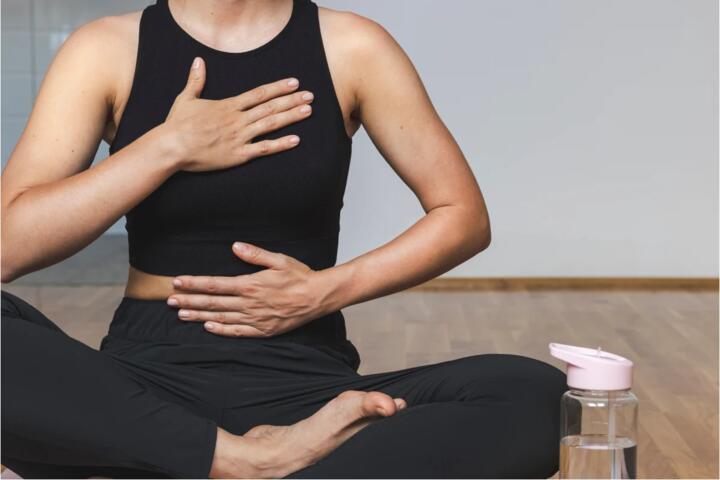
What to do: Place one hand on the upper chest and the other on the abdomen. Inhale so the abdomen rises more than the chest, then exhale slowly. Keep the effort low; the goal is gentle expansion, not maximal lung filling.
Why it works: Diaphragmatic breathing changes the mechanics of breathing and can reduce accessory muscle tension in the neck and shoulders. Lower muscle tension can reduce sensory feedback that contributes to stress.
What it looks like in practice: Practice for 3–5 minutes once or twice daily. During stressful moments, use a brief version—about 5 slow breaths—before returning to the task.
Tools or methods: A mirror can help confirm that the chest is not rising excessively. If you feel breathlessness, reduce the pace and stop if symptoms persist.
Realistic outcomes: People often report less “tight” breathing and better comfort during daily stress. The technique is usually safe when performed gently and without breath-holding.
Try Breath With Attention Cues
What to do: Pair breathing with a simple attention anchor. Examples include feeling airflow at the nostrils, counting exhale cycles, or noticing the sensation of the abdomen moving. When attention drifts, return to the anchor without judgment.
Why it works: Stress often involves both physiological arousal and attentional capture by threat-related thoughts. Attention cues reduce the tendency to monitor bodily sensations in a way that amplifies anxiety.
What it looks like in practice: Use a 1–3 minute “reset” during transitions, such as before entering a room where you expect evaluation. Keep the breathing pattern comfortable and let the attention anchor do the work.
Tools or methods: A short script can help: “Inhale gently, exhale a little longer, feel the air, count one to five, repeat.” If you use a guided audio, choose one that avoids breath-holding prompts.
Realistic outcomes: Many people find this approach reduces rumination during practice. It may not feel relaxing at first, but it can still reduce the intensity of stress responses.
Use Caution With Breath Holds
What to do: Avoid breath-holding when you are anxious, dizzy, or already breathing rapidly. If you want to experiment, keep it brief and only after you can maintain comfortable breathing for several minutes.
Why it works: Breath-holding changes carbon dioxide and oxygen levels, which can alter the urge to breathe and the sensation of air hunger. In some people, those sensations feel calming; in others, they trigger panic-like symptoms.
What it looks like in practice: If you choose to include a pause, keep it short (for example, a brief pause after exhale) and stop if you feel worsening anxiety, chest pain, or significant dizziness.
Tools or methods: Use a “stop rule” before you begin: if symptoms rise, return to normal breathing and end the exercise. Avoid practicing alone if you have a history of fainting or severe panic with breathing exercises.
Realistic outcomes: Breath holds are not required for calming. Many people achieve nervous-system calming with slow, gentle breathing without any pause.
Educational Case Examples
Before A Presentation
A 30-year-old reports racing thoughts and shallow breathing before a work presentation. They practice 2 minutes of slow breathing at a comfortable pace (about 8 breaths per minute) with a longer exhale, then use diaphragmatic breathing for 5 breaths right before walking into the room. They notice less chest tightness and fewer intrusive thoughts during the first minute after starting to speak. The anxiety does not disappear, but the body’s response feels less intense.
After A Disagreement
A 42-year-old describes feeling “revved up” after conflict at home, with difficulty settling down. They use a 3-minute reset with attention cues: inhale gently, exhale slightly longer, and focus on airflow sensations. They avoid breath-holding and stop if they feel lightheaded. Over several days, they report that the same technique helps them return to baseline faster, even though the underlying stressor still occurs occasionally.
Breathing Technique Checklist
| Goal | Technique | What To Aim For | Stop Or Adjust If |
|---|---|---|---|
| Reduce stress arousal | Slow breathing with longer exhale | 6–10 breaths/min; exhale 1–2 seconds longer than inhale | Lightheadedness, worsening anxiety, chest discomfort |
| Relax breathing muscles | Diaphragmatic breathing | Abdomen rises more than chest; gentle effort | Breathlessness that increases or persists |
| Reduce rumination | Breath + attention cues | Count exhale cycles or feel airflow; return when distracted | Feeling trapped in bodily monitoring |
| Experiment cautiously | Short pause after exhale | Only if comfortable; brief and optional | Panic-like sensations, dizziness, fainting history |
Common Mistakes To Avoid
Breathing too fast is a common error. People often interpret “deep breathing” as “more air,” which can lead to hyperventilation. If you notice tingling, dizziness, or a sense of unreality, return to normal comfortable breathing and shorten the next session.
Another mistake is pushing for extreme slowness. Very slow breathing can increase discomfort for some people by changing carbon dioxide levels more than expected. A pace that feels sustainable usually works better than a pace that feels forced.
Many people also over-practice. Doing long sessions when stressed can make the exercise feel like a test, which can increase anxiety. Short sessions repeated more often tend to be easier to tolerate.
Breathing exercises can also be misapplied during medical symptoms. If you have chest pain, severe shortness of breath, fainting, or a new neurologic symptom, breathing techniques should not replace urgent medical evaluation.
FAQ
How quickly do breathing techniques work?
Many people notice changes within minutes, especially with slow breathing and a longer exhale. Effects vary by baseline anxiety, breathing pattern, and whether the technique triggers discomfort.
Can breathing exercises worsen anxiety?
Yes. Breath-holding, overly slow pacing, or hyperventilation can create sensations like dizziness or air hunger that some people interpret as danger, which can increase anxiety.
Do I need to breathe through my nose?
No. Nose breathing can be comfortable and may reduce mouth dryness, but mouth breathing can work if the pace stays gentle and you avoid rapid or forced breaths.
How long should I practice each day?
Start with 1–5 minutes and reassess. If you tolerate it well, you can repeat short sessions during the day rather than doing one long session while stressed.
Are breathing techniques safe for people with lung disease?
Many people with asthma or chronic lung conditions can practice gentle breathing, but breathlessness can worsen with aggressive pacing or breath-holding. If symptoms increase, stop and seek medical advice.
Author's Insight
Breathing techniques calm the nervous system through predictable physiology: changing respiratory rhythm alters sensory input from the airways and lungs, shifts carbon dioxide dynamics, and influences vagal activity that affects heart rate regulation. The most reliable approaches tend to be gentle and paced, because they avoid the sensations linked to hyperventilation or air hunger. People often get better results when they treat breathing practice as a short regulation tool rather than a test of how “perfect” the breath feels. If a technique consistently increases distress or causes dizziness, switching to a gentler pace and avoiding breath-holding is a reasonable next step.
Key Takeaways
- Calming breathing works by changing how breathing signals reach the brain and how autonomic regulation shifts during stress.
- Use a comfortable pace (often 6–10 breaths per minute) and favor a longer, gentle exhale.
- Avoid hyperventilation and breath-holding when you feel anxious, dizzy, or short of breath.
- Short, repeatable sessions usually fit real life better than long practices.
- Stop and seek medical care for urgent symptoms such as chest pain, severe shortness of breath, fainting, or new neurologic signs.