Body Waste Management
The lymphatic system is your body’s secondary circulatory network, but unlike the heart, it lacks a central pump. It relies entirely on muscle contraction, deep breathing, and external stimulation to move "lymph"—a fluid containing white blood cells and cellular waste. When this system becomes sluggish, the body retains interstitial fluid, leading to visible edema and a compromised immune response.
In clinical practice, we often see patients who present with "heavy legs" or morning facial swelling. These aren't just aesthetic concerns; they are bio-signals of fluid stasis. For instance, the thoracic duct, the largest lymphatic vessel, handles nearly 75% of the body's lymph. If your diaphragm isn't moving properly due to shallow breathing, you are essentially stalling your primary detoxification engine.
Real-world data suggests that sedentary lifestyles can decrease lymph flow by up to 90% compared to active movement. A study published in the Journal of Physiology indicates that even 15 minutes of targeted stimulation can increase lymph flow speed by 2 to 3 times for several hours following the session.
Home Management Pitfalls
The most significant mistake beginners make is applying too much pressure. Lymphatic vessels are located just beneath the surface of the skin. Using deep-tissue massage pressure actually collapses these delicate vessels, preventing fluid movement rather than encouraging it. It is a "skin-stretching" technique, not a muscle-kneading one.
Another critical error is ignoring the "terminals." You cannot push fluid toward a closed drain. Many people start massaging their ankles to fix swelling without first opening the nodes in the groin (inguinal) and behind the collarbone (supraclavicular). This results in localized congestion and discomfort, often discouraging people from continuing the practice.
Chronically ignoring these "clogged pipes" leads to the accumulation of metabolic byproducts. In a clinical setting, we call this "lymphatic load." When the load exceeds the transport capacity, you experience brain fog, skin breakouts, and a general feeling of malaise. Real situations involve office workers who sit for 8+ hours; their popliteal nodes (behind the knees) become compressed, leading to lower-extremity swelling that no amount of water-drinking can fix alone.
Daily Clearance Methods
To achieve results, consistency outweighs intensity. You are looking to mimic the natural rhythmic contractions of the lymphangions (the "hearts" of the lymph vessels), which typically pulse 6 to 10 times per minute at rest.
The Supraclavicular Opening Sequence
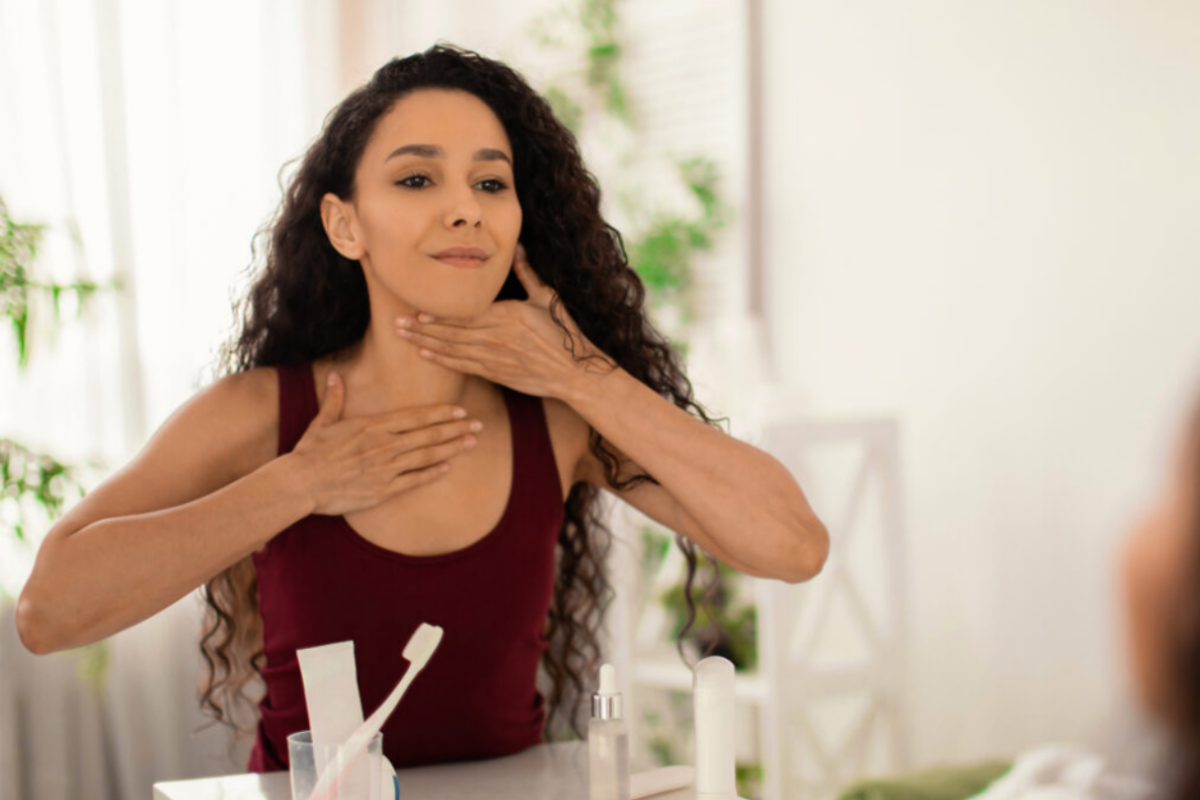
Always start at the base of the neck. This is where the lymphatic system empties back into the venous bloodstream. Use the "J-stroke" technique: place two fingers in the hollow above your collarbones and gently skin-stretch toward the neck in a circular motion. Perform 15 repetitions. This "opens the drain" for the rest of your body’s fluid to exit.
Diaphragmatic Breathing as a Pump
The cisterna chyli is a large lymph reservoir located just below the diaphragm. Deep, belly breathing creates a pressure gradient that literally "sucks" lymph upward from the lower extremities. Spend 5 minutes every morning doing "Box Breathing": inhale for 4 seconds, hold for 4, exhale for 4, and hold for 4. This simple act can move more lymph than an hour of walking.
Dry Brushing for Surface Stimulation
Use a natural fiber brush like those from Grown Alchemist or HigherDOSE. Use long, sweeping strokes toward the heart. The goal is to move the skin, not scrub it. Start at the feet and move upward. Research shows that dry brushing not only moves fluid but also stimulates the nervous system, providing a mild "wake-up" call to the immune cells located in the skin-associated lymphoid tissue (SALT).
Manual Facial Contouring
Facial puffiness is often a result of poor drainage from the submandibular and parotid nodes. Using a high-quality slip agent, such as Vintner’s Daughter Active Botanical Serum, use your fingers to sweep from the center of the chin toward the ears, then down the sides of the neck. This 3-minute routine can reduce visible "morning face" by up to 30% immediately.
Lower Extremity Elevation and Inversion
Gravity is the enemy of lymph in the legs. At the end of the day, practice the "Legs Up The Wall" (Viparita Karani) pose for 10 minutes. By placing your hips higher than your heart, you allow gravity to assist the valves in your lymph vessels. For enhanced results, wear graduated compression socks (15-20 mmHg) from brands like Bombas or Comrad during long flights or workdays.
Hydrotherapy Temperature Cycling
In the shower, switch between 30 seconds of hot water and 10 seconds of cold water. Repeat this 3 times. This causes "vasodilation" (expanding) and "vasoconstriction" (contracting), which creates a mechanical pumping effect on the lymph vessels. It’s an ancient technique modernized by practitioners at Remedy Place to boost systemic circulation and metabolic rate.
Transformation Cases
Case 1: The Corporate Executive
A 45-year-old female executive at a FinTech firm presented with chronic lower leg edema and afternoon fatigue. We implemented a "Micro-Movement" protocol. She utilized the Theragun on its lowest setting for 2 minutes on her groin and behind-the-knee areas twice daily, combined with wearing compression during flights.
Result: 2-centimeter reduction in ankle circumference within 14 days and a self-reported 40% increase in afternoon energy levels.
Case 2: Post-Surgical Recovery
A 30-year-old male athlete recovering from knee surgery experienced significant localized swelling that hindered physical therapy. We introduced manual lymphatic drainage (MLD) techniques focused on the proximal nodes. By stimulating the "upstream" nodes before icing the "downstream" injury, the patient saw a drastic change.
Result: 50% faster reduction in swelling compared to the standard RICE (Rest, Ice, Compression, Elevation) method alone, allowing for an earlier return to weight-bearing exercises.
Daily Routine Checklist
| Time of Day | Action Item | Tool/Method | Estimated Duration |
|---|---|---|---|
| Morning | Diaphragmatic Breathing | Box Breathing (4-4-4-4) | 3 Minutes |
| Morning | Dry Brushing | Natural Bristle Brush | 5 Minutes |
| Workday | Joint Mobilization | Ankle Circles & Wrist Rolls | 1 Minute every hour |
| Evening | Inversion | Legs Up The Wall | 10 Minutes |
| Evening | Facial Drainage | Gua Sha or Manual Sweep | 3 Minutes |
Hazards and False Claims
A common mistake is assuming that "detox teas" or supplements can replace mechanical movement. No pill can move lymph; only muscle or external pressure can. Be wary of products promising "overnight lymphatic weight loss." While you may lose "water weight," permanent fat loss is a separate metabolic process.
Another hazard is ignoring contraindications. Never perform lymphatic drainage if you have an active infection, a fever, or a history of blood clots (DVT) without consulting a physician. Moving fluid when an infection is present can potentially spread the pathogen through the system more quickly. If you see a red, hot, or painful area, seek medical attention rather than massaging it.
Lastly, avoid dehydration. The lymphatic system requires a fluid medium to transport waste. If you are dehydrated, the lymph becomes "viscous" or thick, making it much harder to move. Aim for a baseline of 30ml of water per kilogram of body weight, supplemented with electrolytes from sources like LMNT to maintain cellular pressure gradients.
FAQ
How often should I perform lymphatic drainage at home?
Daily consistency is key. Even 5 to 10 minutes of gentle stimulation is more effective than a 90-minute session once a month. Think of it like brushing your teeth—it is a maintenance task for your internal environment.
Can I use a massage gun for lymphatic drainage?
Yes, but only on the lowest vibration setting. High-intensity percussion is for muscle recovery. For lymph, you want the vibration to stimulate the superficial vessels. Brands like Hyperice offer specific dampened attachments that are ideal for this purpose.
Why do I feel tired or have a headache after drainage?
This is often referred to as a "herxheimer-like" reaction. As you mobilize stagnant waste products, your kidneys and liver have to process them. Drinking extra water and resting usually resolves this within a few hours. It’s a sign the system is finally moving.
Is Gua Sha better than manual hand massage?
Both are effective. A Gua Sha tool (like those from Mount Lai) provides a consistent edge for skin-stretching, which can be easier on your hands. However, your fingers allow for better "feel" of the tissue tension. Use whatever tool makes you most likely to stick to the routine.
Will this help with cellulite?
Cellulite is caused by fat cells pushing through connective tissue, but fluid retention makes it appear significantly worse. By draining excess interstitial fluid, the skin appears smoother and the "dimpling" effect is often visibly reduced, though the underlying structure remains.
Author’s Insight
In my years of studying human optimization, I have found that the lymphatic system is the most overlooked pillar of health. We focus so much on what we put in—nutrition, supplements, air—but we rarely focus on how we get the trash out. My personal breakthrough came when I realized that my afternoon brain fog wasn't a lack of caffeine, but a lack of movement in my neck and thoracic duct. Once I integrated 5 minutes of "opening the terminals" into my morning, my mental clarity shifted permanently. My best advice: start with your breath; it’s the only pump you can control 24/7.
Summary
Mastering lymphatic drainage at home is a powerful tool for self-regulation and systemic health. By prioritizing the "opening" of proximal nodes, using light rhythmic pressure, and supporting the process with hydration and inversion, you can significantly reduce inflammation and improve your body's resilience. Start tomorrow morning with three minutes of diaphragmatic breathing and supraclavicular circles. This small investment in your "internal plumbing" will yield dividends in energy, skin health, and immune function that far exceed the effort required.