Sleep Latency Science
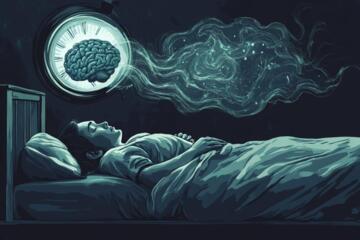
Falling asleep is not a toggle switch; it is a biological transition governed by the homeostatic sleep drive and the circadian rhythm. When these two systems are aligned, the brain transitions from high-frequency Beta waves to calming Alpha and Theta waves seamlessly. However, modern environmental stressors often keep us in a state of "hyperarousal," where the nervous system remains stuck in a sympathetic (fight-or-flight) state rather than shifting to the parasympathetic (rest-and-digest) branch.
In my clinical observations, the difference between a restless hour and a ten-minute drift-off usually comes down to Core Body Temperature (CBT) and Adenosine accumulation. According to the National Sleep Foundation, a healthy adult should ideally fall asleep within 15 to 20 minutes. Dropping that to 10 minutes requires surgical precision in your environment and internal chemistry. Real-world data from wearable tech like Oura Ring users shows that consistent pre-sleep routines can improve sleep efficiency scores by up to 15% within just two weeks.
Rapid Sleep Barriers
The primary reason most high-achievers struggle to sleep quickly is "Cognitive Shrapnel." This is the mental residue of unresolved tasks, emails, and stressors from the day that keep the prefrontal cortex firing. When you lie down, the brain finally has the silence it needs to process these items, leading to the dreaded "tired but wired" sensation.
Another major pain point is Digital Phototoxicity. Exposure to blue light (approx. 450–490 nm) from smartphones suppresses melatonin production for up to twice as long as other light wavelengths. Harvard researchers found that blue light shifts circadian rhythms by twice as much as green light (3 hours vs. 1.5 hours). This delay creates a "social jetlag" effect, where your body thinks it’s 8:00 PM when it is actually midnight, making a 10-minute fall-asleep window biologically impossible.
High-Impact Protocols
1. Implementation of the 10-3-2-1-0 Framework
This is a systemic countdown used by productivity experts to phase out stimulants and cognitive load. Stop caffeine 10 hours before bed; stop eating 3 hours before; stop work 2 hours before; and eliminate screens 1 hour before. The "0" represents the number of times you hit the snooze button the next morning. This structure ensures that by the time your head hits the pillow, your liver has processed stimulants and your insulin levels are stable.
2. Thermal Down-Regulation via Passive Body Heating
To trigger sleep, your core temperature must drop by about 1°C (2°F). Research published in Biomedical Engineering Online suggests that taking a hot bath or shower (40–43°C / 104–110°F) 90 minutes before bed significantly speeds up sleep onset. This "Warm Bath Effect" works because it stimulates blood flow to the hands and feet, which then radiates heat away from the core, inducing a rapid cooling phase that signals the brain it is time for sleep.
3. Utilizing Cognitive Shuffling and Mental Offloading
Instead of counting sheep, use the "Cognitive Shuffle" method developed by Dr. Luc Beaudoin. Mentally visualize random, non-threatening objects (e.g., Apple, Bear, Chair). This prevents the brain from engaging in "analytical rumination"—the problem-solving mode that keeps you awake. Tools like the mySleepButton app can automate this process, providing prompts that scramble logical thought patterns into sleep-inducing imagery.
4. Targeted Supplementation and Olfactory Anchoring
While magnesium is common, Magnesium Threonate is the only form that effectively crosses the blood-brain barrier to relax the central nervous system. Pair this with Apigenin (found in chamomile) to bind to GABA receptors. Additionally, use olfactory anchoring: smelling lavender oil only at bedtime. Over time, the brain associates that specific scent with immediate sedation, a process known as neuro-associative conditioning.
5. Military-Grade Muscle Relaxation Techniques
The U.S. Navy Pre-Flight School developed a method to help pilots sleep in 2 minutes or less, even under combat stress. It involves systematically relaxing every muscle group: starting from the forehead, moving to the jaw, shoulders, and down to the toes, while simultaneously clearing the mind for 10 seconds. If a thought enters, repeat "don't think, don't think" to yourself. Statistics show a 96% success rate after 6 weeks of consistent practice.
6. Controlled Hypoxic Breathing (The 4-7-8 Method)
Pioneered by Dr. Andrew Weil, this breathing technique acts as a natural tranquilizer for the nervous system. Inhale for 4 seconds, hold for 7, and exhale forcefully for 8. The long hold increases carbon dioxide levels slightly, which triggers a vasodilatory effect and slows the heart rate. It effectively "forces" the body out of a sympathetic state and into parasympathetic dominance in under three minutes.
Real-World Success
Case Study 1: The Executive Burnout Recovery
A senior VP at a FinTech firm reported taking 45+ minutes to fall asleep due to "project looping." We implemented a "Brain Dump" journal protocol (writing every worry down at 8:00 PM) and introduced Eight Sleep intelligent cooling covers set to 68°F.
Result: Sleep latency dropped to 8 minutes within 21 days, and REM sleep increased by 22% as measured by wearable data.
Case Study 2: The Freelancer’s Circadian Reset
A graphic designer working late hours struggled with a 2:00 AM "second wind." We introduced Swanwick blue-light-blocking glasses after 7:00 PM and the 4-7-8 breathing method.
Result: The designer reported falling asleep consistently in 12 minutes, eliminating the need for OTC sleep aids like Benadryl or Melatonin gummies.
Evening Checklist
| Timeframe | Action Item | Primary Benefit |
|---|---|---|
| 90 Mins Before | Hot Shower/Bath (40°C) | Rapid Core Temperature Drop |
| 60 Mins Before | Digital Blackout / Blue Light Blockers | Natural Melatonin Surge |
| 30 Mins Before | Brain Dump / Journaling | Reduced Cognitive Ruminations |
| 15 Mins Before | Magnesium Threonate (200mg) | CNS Relaxation |
| In Bed | Military Relaxation + 4-7-8 Breath | Parasympathetic Activation |
Common Pitfalls to Avoid
Many people believe a "nightcap" of alcohol helps them sleep. While alcohol is a sedative that might help you pass out, it severely fragments sleep architecture and suppresses REM sleep. You may fall asleep in 10 minutes, but the quality will be poor, and you will likely experience a "rebound effect" in the middle of the night.
Another error is staying in bed when you can't sleep. If you aren't asleep in 20 minutes, get out of bed. Your brain shouldn't associate the mattress with being awake and frustrated. This is known as Stimulus Control Therapy. Go to a different room with dim lighting, do a boring task, and return only when your eyelids feel heavy.
FAQ
Is it normal to fall asleep in less than 5 minutes?
While the goal here is 10 minutes, falling asleep instantly (under 5 minutes) can actually be a sign of severe sleep deprivation or sleep apnea. A 10-to-15-minute window is the "sweet spot" for a healthy, well-rested individual.
Do "Pink Noise" or "White Noise" machines actually work?
Yes. Pink noise (like rainfall) has been shown in studies to increase deep sleep (slow-wave sleep) by masking environmental spikes in sound that would otherwise trigger an arousal response in the brain.
Can I use my Kindle or e-reader before bed?
Only if it uses E-Ink technology without a blue-light backlight. Standard tablets like iPads emit significant blue light. If using an e-reader, set the "Warmth" filter to maximum to minimize circadian disruption.
How does exercise affect sleep latency?
High-intensity interval training (HIIT) within 2 hours of bed increases adrenaline and core temperature, making 10-minute onset impossible. Stick to restorative yoga or stretching if exercising late in the evening.
What is the ideal room temperature for fast sleep?
Clinical consensus points to 18°C (65°F). A cool room facilitates the necessary drop in core body temperature required to initiate the sleep cycle.
Author’s Insight
In my years of optimizing human performance, I have found that sleep is the ultimate "force multiplier." I personally struggled with onset insomnia for a decade until I realized that the bedroom should be treated like a cave: dark, cool, and silent. My biggest breakthrough was moving my phone charger to the kitchen; the psychological relief of not having a "portal to the world" next to my head was the single most effective change I ever made. Consistency beats intensity—doing a 5-minute ritual every night is better than a 2-hour ritual once a week.
Summary
Achieving a 10-minute sleep onset is a skill that combines environmental control with nervous system regulation. By implementing the 10-3-2-1-0 rule, utilizing thermal down-regulation through hot baths, and practicing the military relaxation technique, you can override the modern stressors that keep you awake. Start by changing one variable tonight—ideally, the cooling of your environment—and observe the immediate impact on your sleep latency. True recovery begins the moment you master the transition from the day's chaos to the night's stillness.