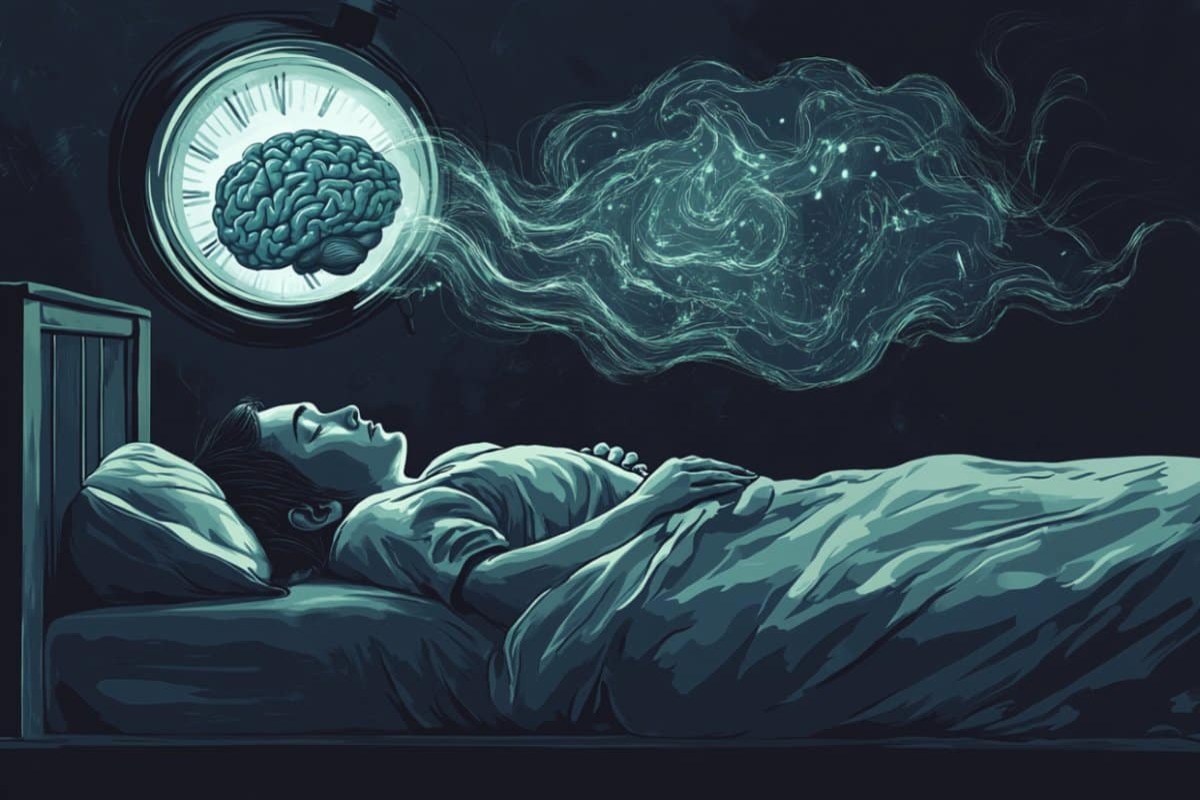
Sleep And Memory
Sleep is not just rest; it is a period when the brain reorganizes information learned during the day. After learning a new skill or studying facts, the brain replays parts of that experience during sleep, which helps stabilize memory traces. This replay is linked to specific sleep stages rather than sleep duration alone.
During deep non-rapid eye movement (NREM) sleep, slow-wave activity supports consolidation of declarative memories, such as word lists or facts. During rapid eye movement (REM) sleep, brain activity patterns resemble aspects of waking processing and are associated with integrating memories and supporting emotional learning. The balance between these stages changes with age, sleep schedule regularity, and sleep disorders.
Practical examples include learning a route in a new city or practicing a motor task like typing. People often notice that performance improves after a night of sleep even when they do not practice during the night. That improvement is not guaranteed, but it reflects how sleep can strengthen and reorganize what was encoded earlier.
Why Focus Drops
Focus depends on sustained attention networks that are sensitive to sleep loss. When sleep is shortened or fragmented, the brain has less time to complete the processes that restore attention control. The result is slower reaction time, more lapses, and reduced ability to filter distractions.
Sleep deprivation also affects working memory, the mental “workspace” used to hold and manipulate information. When working memory capacity drops, tasks that require multi-step reasoning feel harder, even if the person knows the material. This can show up as rereading the same paragraph, missing details in a meeting, or losing track of steps in a routine task.
Biologically, insufficient sleep alters neurotransmitter systems involved in attention, including pathways related to dopamine and norepinephrine. It also increases inflammatory signaling and changes stress hormone patterns, which can worsen alertness and decision-making. Fragmented sleep reduces the continuity of sleep stages, which can blunt the consolidation processes that rely on stable sleep architecture.
Real-world situations often involve “social jet lag,” where sleep timing shifts on weekends. Even if total sleep time seems adequate, the circadian mismatch can reduce sleep quality and impair next-day attention. Another common scenario is late-night work followed by early morning obligations, which creates chronic sleep restriction and increases daytime sleepiness.
Protect Sleep Quality
Set A Consistent Schedule
Choose a wake time you can keep within about 30–60 minutes every day, including weekends. A stable wake time anchors circadian rhythms, which helps the brain enter and maintain the sleep stages linked to memory consolidation. If you shift bedtime but keep wake time consistent, sleep pressure still builds in a predictable way.
In practice, if you wake at 7:00 a.m. on weekdays, aim for a similar wake time on weekends. If you must adjust, change the schedule gradually over several days rather than making a large jump. Many people notice improved daytime alertness within 1–2 weeks when their sleep timing becomes more regular.
Tools that can help include a simple sleep diary and a phone timer for a fixed “lights out” window. Tracking bedtime, wake time, and perceived sleep quality can reveal patterns such as weekend oversleeping or frequent late awakenings.
Time Caffeine And Meals
Caffeine blocks adenosine receptors, reducing sleep pressure and delaying the onset of sleep. Even when people fall asleep, caffeine can reduce deep NREM sleep and increase nighttime awakenings, which can impair memory consolidation and next-day focus. The effect depends on dose and individual sensitivity.
A practical approach is to stop caffeine 6–10 hours before bedtime. If you sleep at 11:00 p.m., that means no caffeine after roughly 1:00–5:00 p.m. Meals also matter: large or late meals can increase reflux or discomfort, leading to fragmented sleep.
In practice, keep dinner at least 2–3 hours before bed when possible. If you cannot, choose smaller portions and reduce alcohol, which can worsen sleep fragmentation. A common outcome is fewer awakenings and a shorter time to fall asleep after adjusting caffeine timing.
Use Light To Shift Rhythm
Light exposure affects circadian timing through retinal pathways. Morning light tends to advance the body clock, making it easier to feel sleepy earlier at night. Evening light, especially from bright screens, can delay melatonin release and push sleep later.
Try getting outdoor light within the first hour after waking, even if it is cloudy. In the evening, dim indoor lights and reduce bright screen exposure in the last 1–2 hours before bed. If you need screens, lowering brightness and using night-shift style settings can reduce intensity, though it does not remove all effects.
What it looks like in practice: a person who previously stayed up late may feel sleepy earlier after several days of consistent morning light and reduced evening brightness. Improvements in focus often follow once sleep timing stabilizes.
Manage Wakefulness At Night
If you lie awake for long periods, the brain can learn to associate the bed with wakefulness. That conditioning makes it harder to fall asleep and can increase anxiety about sleep, which further fragments sleep. This is common when people try to “force” sleep after repeated nights of poor rest.
A practical method is to get out of bed if you cannot fall asleep after about 20–30 minutes. Move to a dim room and do a quiet activity, then return when you feel sleepy. Keeping the room cool and dark also supports sleep onset.
Realistic outcomes: this approach often reduces time awake in bed over 1–2 weeks, though the first few nights can feel uncomfortable. If insomnia persists for months or is accompanied by loud snoring, choking/gasping, or severe daytime sleepiness, medical evaluation is appropriate because sleep disorders can be involved.
Sleep Focus Case Examples
Student With Weekend Drift
A college student studies late on weekdays and sleeps in on weekends. They report that they can memorize material during the week but forget it quickly after weekend breaks. After tracking sleep for two weeks, they notice wake times shift by 2–3 hours on Saturdays and Sundays. They keep the weekend wake time within 45 minutes of weekdays and reduce caffeine after mid-afternoon. Over the next 10–14 days, they report fewer attention lapses during lectures and better retention on weekly quizzes.
Shift Worker With Fragmented Sleep
A person working rotating shifts sleeps at different times each week. They experience difficulty concentrating during the first half of their shifts and feel “wired but tired” on days off. Their sleep diary shows frequent awakenings and inconsistent sleep timing. They add morning light exposure after waking, reduce bright light during the commute home, and keep a consistent sleep window on workdays. They also limit naps to short periods earlier in the day when needed. Over several weeks, they report improved focus stability, though complete normalization is not immediate because circadian disruption from rotating schedules is difficult to reverse quickly.
Sleep Vs Performance Checklist
| Situation | What Often Happens To Focus | Common Sleep Mechanism | What To Try First |
|---|---|---|---|
| Short sleep for several nights | More lapses, slower reaction time | Reduced time for consolidation and attention recovery | Stabilize wake time and protect a consistent sleep window |
| Weekend oversleeping | “Foggy” mornings, worse concentration | Circadian mismatch and sleep stage disruption | Keep weekend wake time within 30–60 minutes |
| Caffeine late in the day | Longer time to fall asleep, restless sleep | Lower sleep pressure and altered deep NREM sleep | Stop caffeine 6–10 hours before bed |
| Frequent awakenings | Reduced working memory and sustained attention | Fragmented sleep architecture | Use a consistent schedule and manage wakefulness in bed |
Common Mistakes
Many people try to “catch up” with long weekend sleep. This often worsens circadian mismatch and can reduce sleep quality on Sunday night, which affects Monday focus. A better approach is to protect a consistent wake time and adjust bedtime gradually.
Another common mistake is treating sleep as a single number. Two people can sleep 7 hours, but one may have fragmented sleep from reflux, restless legs, or sleep apnea while the other has stable sleep. Memory and focus track sleep quality and continuity, not only total hours.
People also underestimate the impact of late caffeine and alcohol. Caffeine can delay sleep onset and reduce deep NREM sleep, while alcohol can increase early sleepiness but tends to fragment sleep later in the night. Both patterns can lead to next-day attention problems.
Finally, staying in bed while awake can create a learned association between bed and wakefulness. That pattern can prolong insomnia and increase stress, which further reduces sleep depth and continuity.
FAQ
How Many Hours Of Sleep Help Memory?
Memory consolidation depends on both duration and sleep quality. Many adults perform best with around 7–9 hours, but individual needs vary, and irregular schedules can impair memory even when total hours look adequate.
Does Napping Improve Focus?
Short naps can reduce sleepiness and help attention, especially when sleep is restricted. Long or late naps can delay nighttime sleep and worsen next-day focus, so timing and duration matter.
Can Screens Before Bed Affect Learning?
Bright light in the evening can delay circadian timing and reduce melatonin signaling, which can shift sleep later and fragment sleep. That disruption can impair the sleep stages linked to memory consolidation.
Why Do I Forget After A Bad Night?
After poor sleep, the brain has less opportunity to complete consolidation processes and working memory capacity can drop. The result is weaker retention and more difficulty holding information during tasks.
When Should Sleep Problems Be Checked?
Medical evaluation is appropriate when there is persistent insomnia, loud snoring with choking/gasping, severe daytime sleepiness, or sleep disruption that lasts weeks and affects work or safety.
Author's Insight
Sleep affects memory and focus through stage-specific processes and through the stability of sleep architecture. Deep NREM sleep supports consolidation of declarative information, while REM sleep contributes to integration and emotional learning. Sleep loss and fragmentation reduce attention control and working memory, which can make learning feel harder even when effort is unchanged. Because sleep needs and causes of poor sleep vary, the most reliable approach is to track sleep timing and quality, adjust modifiable factors like caffeine timing and light exposure, and seek medical input when symptoms suggest a sleep disorder.
Key Takeaways
- Memory consolidation relies on sleep stages and sleep continuity, not only total hours.
- Short or fragmented sleep worsens focus through reduced working memory and attention control.
- Regular wake time, earlier caffeine cutoff, and evening light reduction are practical levers.
- If insomnia persists or symptoms suggest sleep apnea or another disorder, medical evaluation is appropriate.