What People Get Wrong
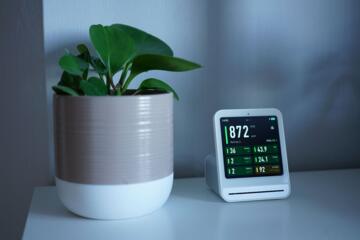
Many people treat ppm as a health verdict, then ignore the measurement context. A sensor reading depends on calibration, sensor type, placement, and whether the device is exposed to fresh air regularly. Some consumer monitors drift over time, and some “auto-calibration” features can behave oddly when a home never reaches outdoor-like levels.
Another common mistake is assuming that 1500 ppm means “danger.” CO₂ is relatively non-toxic at these indoor levels for most healthy adults, but elevated CO₂ still signals that exhaled air is accumulating. That accumulation often means higher exposure to whatever else is carried in exhaled breath, including aerosols that can contain respiratory pathogens. CO₂ also tracks stale air and can correlate with discomfort, drowsiness, and headache in poorly ventilated spaces, even when no single pollutant is singled out.
CO₂ readings also depend on room dynamics. A small bedroom with a closed door and one sleeper can reach higher levels than a larger living room with the same occupancy. Ceiling fans, HVAC supply vents, and door gaps change mixing. If a monitor sits near a supply vent, it may read lower than the breathing zone elsewhere, which is why placement matters more than people expect.
Supporting technologies shape what you can do next. Ventilation rate depends on HVAC settings, outdoor air dampers, window use, and infiltration through leaks. Air cleaning depends on filtration or air changes, not on CO₂ removal. CO₂ is a gas that passes through filters unless the system includes special capture, so purifiers mainly reduce particles and some gases, while ventilation reduces CO₂.
How To Interpret 800, 1000, 1500
800 ppm often indicates moderate ventilation for many homes, especially if outdoor air is around 400 to 450 ppm. In practice, 800 ppm can appear during light occupancy, short activities, or when a room has some air exchange. If the reading stays near 800 ppm for hours with multiple people, it suggests the room is not getting enough fresh air for comfort.
1000 ppm usually indicates weaker ventilation or higher occupancy. Many people notice that concentration drops or that the room feels “stuffy” around this range, though the subjective experience varies. If CO₂ rises steadily toward 1000 ppm during a meeting, the room likely has insufficient outdoor air for the number of occupants and the duration.
1500 ppm indicates that exhaled air is accumulating more strongly. This level often occurs in bedrooms with doors closed, in classrooms during long sessions, or in offices with occupancy spikes and limited outdoor air. At 1500 ppm, the ventilation response time becomes important: if CO₂ does not fall after windows open or HVAC runs, airflow may be short-cycling or air mixing may be poor.
These thresholds are not universal laws. Different guidance documents use different targets, and outdoor CO₂ varies by location and time. The most defensible approach is to treat CO₂ as a relative indicator: aim for lower “above outdoor” values and watch how quickly the reading responds to ventilation changes.
Solutions And Advice
Use Outdoor-Adjusted Targets
Start by measuring outdoor CO₂ or using a local estimate from your region. If your outdoor baseline is 420 ppm, then 800 ppm is about 380 ppm above outdoor, 1000 ppm is about 580 ppm above outdoor, and 1500 ppm is about 1080 ppm above outdoor. Track the “above outdoor” number over time, not just the peak. If your monitor supports it, record readings at 5 to 10 minute intervals during typical occupancy.
As a practical decision rule, aim to keep indoor CO₂ from climbing quickly during occupancy. If CO₂ rises by 300 to 500 ppm over 30 to 60 minutes, ventilation is likely too low for the room’s use. When you change ventilation, watch for a noticeable drop within 10 to 20 minutes. If the drop is slow, the limiting factor may be poor air exchange rather than filtration.
Improve Ventilation With Feedback
Windows are the fastest way to test cause and effect. Open a window enough to create a draft, then observe whether CO₂ declines. If you have mechanical ventilation, increase the HVAC fan speed or outdoor air setting if your system allows it. Some thermostats show “fan on” versus “auto,” and “fan on” often increases air movement even when heating or cooling cycles are off.
For a bedroom, a common pattern is that CO₂ rises overnight when the door is closed and windows stay shut. A small amount of controlled fresh air, like a trickle vent or a window cracked open, can reduce the peak. In one anonymized scenario, a family measured CO₂ in a 12 m² bedroom and saw peaks around 1400 to 1600 ppm with the door closed; after opening a window 5 to 10 cm for part of the night, the peak dropped by roughly 300 to 500 ppm. The exact numbers depend on outdoor conditions and room leakage, and the sensor placement near the bed mattered.
Pair Filtration With Ventilation
Air cleaners reduce particles and some aerosols, but they do not remove CO₂ in the same way. If you use a HEPA air purifier, focus on clean air delivery rate (CADR) and noise limits rather than ppm changes. A purifier can still help with respiratory aerosols, while ventilation reduces CO₂ and the buildup of exhaled air.
When you run a purifier, expect little or no immediate CO₂ drop. If CO₂ drops, it usually means ventilation changed, not that filtration captured CO₂. In a classroom-style scenario, a monitor near the teacher desk stayed near 1200 to 1400 ppm even after running a purifier at high speed; CO₂ fell only after the HVAC outdoor air setting increased and windows were opened briefly between sessions.
Choose Sensors That Behave
Sensor accuracy varies. Look for devices that specify sensor type and calibration behavior. NDIR (non-dispersive infrared) sensors are common in CO₂ monitors, while cheaper sensors may drift more. If your monitor has an “auto-calibration” feature, it may assume the lowest reading over time corresponds to outdoor air, which can be wrong in buildings that never reach outdoor-like levels.
Place the monitor in the breathing zone, not directly against a window, supply vent, or return grille. A practical target is around 1 to 1.5 meters above the floor in a room where people sit or sleep. I have seen readings swing by 200 to 400 ppm simply from moving a device from near a door to the center of a room, which is why placement checks are worth the effort. If you can, compare two monitors side by side for a day to understand your measurement noise.
Case Examples
Example 1: Bedroom at night. A couple used a CO₂ monitor in a closed bedroom during sleep. The monitor peaked around 1500 ppm, then slowly declined after morning ventilation. They tried opening a window slightly and running the HVAC fan for a short period before bed. The peak dropped to around 1100 to 1300 ppm, and the decline after waking became faster, suggesting improved air exchange rather than sensor artifacts.
Example 2: Office meeting room. A small team met for 60 minutes with the door closed. CO₂ climbed from about 650 to 1200 ppm, then stayed elevated after the meeting ended. They increased HVAC outdoor air during the next session and cracked the door for 10 minutes between meetings. CO₂ rose more slowly and returned closer to baseline before the next group arrived, reducing the time the room spent above 1000 ppm.
CO2 Checklist And Comparison
| Reading | Typical Meaning | What To Do First | What To Watch |
|---|---|---|---|
| ~800 ppm | Moderate ventilation for many homes | Check occupancy and door/window status | Does it climb during use? |
| ~1000 ppm | Weaker ventilation or higher occupancy | Increase fresh air or HVAC fan time | How fast does CO₂ fall after changes? |
| ~1500 ppm | Exhaled air accumulation is high | Ventilate immediately, then reassess | Does CO₂ drop within 10 to 20 minutes? |
Step-by-step checklist for a room:
- Record outdoor CO₂ once or estimate a baseline from your region, then compute “above outdoor.”
- Place the monitor in the breathing zone away from vents and windows.
- During normal occupancy, note the starting CO₂ and the peak after 30 to 60 minutes.
- Change one ventilation variable at a time, like window opening width or HVAC fan setting.
- Wait 10 to 20 minutes and check whether CO₂ trends down, not just whether it fluctuates.
- If CO₂ stays high, increase outdoor air or reduce time with doors closed.
- Use filtration for aerosol control, but do not expect it to lower CO₂.
Common Mistakes
Buying a monitor and trusting the first number without checking placement is a frequent error. A device near a window can read lower because it samples fresher air, while a device near a return vent can read higher. Moving the monitor by even a meter can change the reading enough to mislead decisions.
Another mistake is chasing CO₂ with air purifiers alone. HEPA units improve particle control, but CO₂ is not captured by typical filters. If CO₂ does not change after running a purifier, the result is not proof that the purifier is ineffective for particles; it is proof that CO₂ removal is not the purifier’s job.
People also misread sensor behavior during calibration. Some monitors need time to stabilize after power-on, and some auto-calibration modes can “correct” toward outdoor air based on the lowest readings, which may not occur indoors. A mild frustration is common here: the device looks stable, then slowly drifts over days, which changes your interpretation of trends.
Finally, readers sometimes ignore the room’s use pattern. A room that stays at 900 ppm during empty hours may still reach 1500 ppm during occupancy if the ventilation rate is insufficient. The right comparison is “during use,” not “at random times.”
FAQ
Is 800 Ppm CO₂ Safe?
800 ppm usually indicates moderate ventilation when outdoor air is around 400 to 450 ppm. It does not guarantee comfort or low exposure to other pollutants, but it often reflects a manageable buildup of exhaled air for many homes.
What Does 1000 Ppm Mean?
1000 ppm typically means CO₂ is accumulating faster than outdoor air is replacing it. If the level rises during occupancy and stays elevated, increasing fresh air or HVAC outdoor air time usually reduces the peak.
Should I Worry About 1500 Ppm?
1500 ppm signals strong accumulation of exhaled air, which often corresponds to poorer ventilation. CO₂ itself is not usually the direct hazard at these levels for healthy adults, but the reading suggests you should improve ventilation and reassess room conditions.
How Fast Should CO₂ Drop After Ventilating?
In many rooms, CO₂ trends downward within 10 to 20 minutes after meaningful ventilation changes. The exact timing depends on room volume, airflow paths, and whether the monitor is sampling the breathing zone.
Do Air Purifiers Lower CO₂?
Typical HEPA air purifiers do not meaningfully lower CO₂ because they capture particles, not the gas. CO₂ reductions usually come from increased outdoor air or air exchange, not from filtration alone.
Author's Insight
CO₂ is a proxy for ventilation, not a direct measure of health outcomes. The most defensible interpretation uses the difference between indoor CO₂ and outdoor baseline, then checks whether CO₂ responds to ventilation changes. Sensor placement and calibration behavior can shift readings by hundreds of ppm, so trend tracking matters more than a single snapshot.
When readers treat CO₂ as feedback, they can separate “stale air” problems from particle control problems. A practical approach is to pair ventilation improvements with filtration when the room has high occupancy or limited outdoor air, while recognizing that CO₂ will not drop from filtration alone.
Key Takeaways
- 800, 1000, and 1500 ppm are best interpreted relative to outdoor baseline and room use, not as universal safety cutoffs.
- CO₂ reflects ventilation and occupancy patterns, and it responds quickly to window opening or HVAC outdoor air changes.
- Air purifiers help with particles and aerosols, but they do not remove CO₂ like ventilation does.
- Monitor placement, calibration drift, and “during occupancy” measurements can change decisions more than the headline ppm number.
- Use a simple checklist: measure baseline, track rise during use, change one ventilation variable, then confirm CO₂ trends down within 10 to 20 minutes.