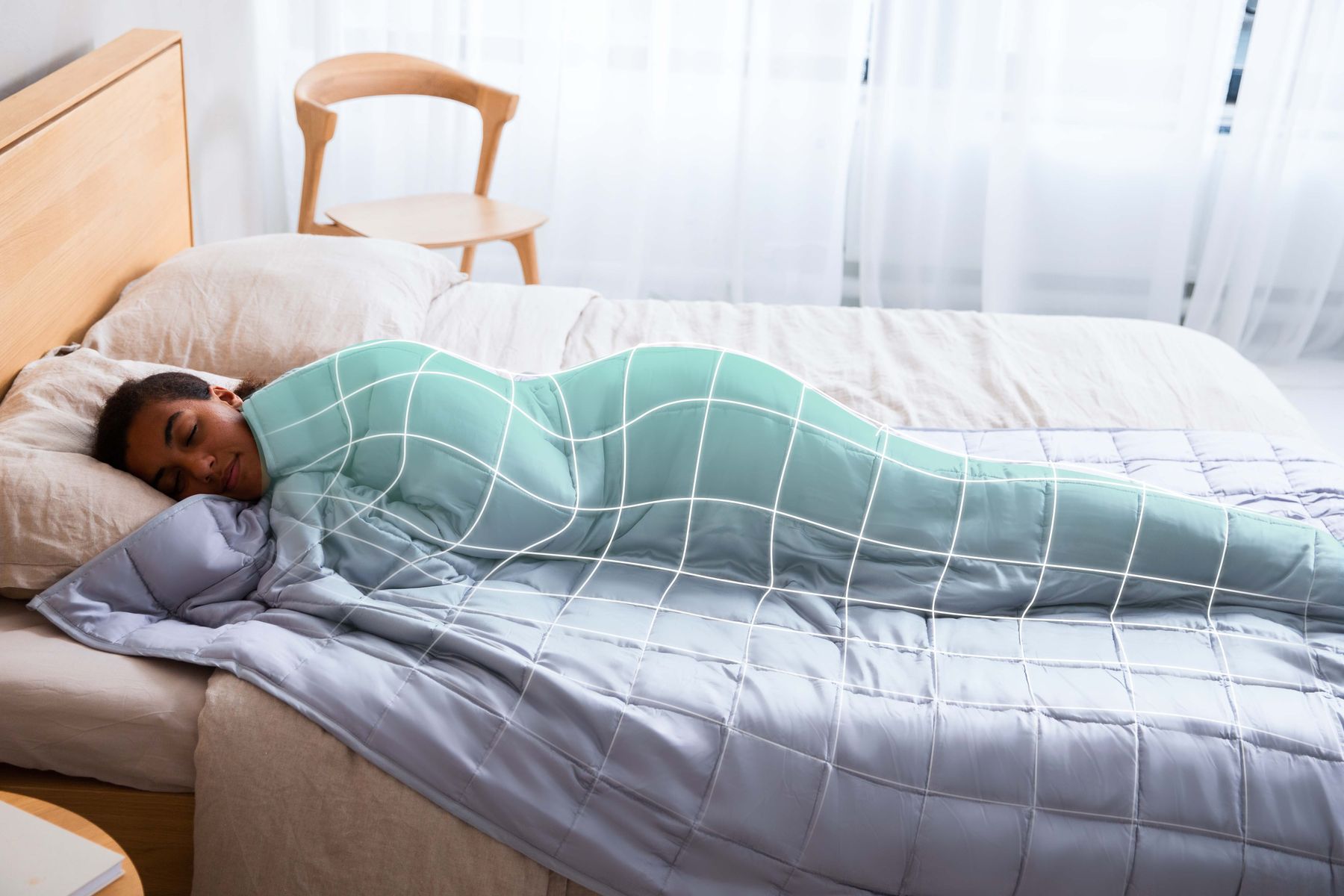
Core Temperature And Sleep
Core body temperature (CBT) follows a daily rhythm driven by the body clock. In the evening, CBT typically begins to fall, and this cooling phase aligns with increasing sleep propensity. Sleep onset often becomes easier when the body enters a state that favors heat loss and reduced alertness.
CBT is not the same as skin temperature. Skin temperature can rise or fall quickly with room temperature, bedding, clothing, and even a warm shower. CBT changes more slowly and reflects internal heat balance, which is why CBT patterns track circadian timing more closely than a single skin reading.
Practical examples help clarify the concept. If you take a late hot bath, your skin temperature may stay elevated for a while, and your body may delay the normal evening cooling process. If you sleep in a very warm room, heat loss is harder, which can keep the body in a higher-heat state even when you feel tired. If you work night shifts or frequently change bedtime, the circadian rhythm that drives the cooling phase can shift, making sleep onset harder at the usual bedtime.
Common Temperature Mistakes
Many people interpret temperature data from wearables as if it directly equals CBT. Most consumer devices estimate skin temperature or infer internal temperature using algorithms that vary by brand and sensor placement. A wearable trend can still be useful, but it should be treated as an indirect marker rather than a precise measure of CBT.
Another common mistake is focusing on a single number at bedtime. Sleep onset depends on the direction and timing of temperature change, not only the absolute value. Two people can have the same temperature at 10:00 p.m. yet fall asleep at different times because one has already started the evening cooling phase while the other is still in a warming or plateau period.
Late-day light exposure and meal timing can also disrupt the temperature rhythm. Light affects circadian phase through retinal pathways, and circadian phase influences the timing of the CBT decline. Large or late meals can raise metabolic heat production and shift autonomic activity, which can alter the pre-sleep thermal environment.
Heat loss mechanisms link temperature to sleep onset. As CBT begins to fall, the body promotes heat dissipation through changes in blood flow to the skin and sweating behavior. If heat loss is limited—by a warm room, heavy blankets, or overheating from exercise—sleep onset can be delayed because the body remains in a higher-heat state.
Recommendations To Try
Track Trends, Not One-Offs
Use temperature information as a trend across multiple evenings rather than a single bedtime snapshot. Aim to observe whether your temperature begins to decline in the hour or two before you usually fall asleep. If your wearable shows a late drop, compare that timing with your actual sleep onset time.
In practice, record bedtime, time to fall asleep, room temperature, and any late heat exposure (hot shower, heating pad, electric blanket). Over 2–3 weeks, patterns often emerge: for example, a consistent delay in sleep onset on nights when temperature stays elevated longer.
Tools that help include a sleep diary, a wearable that reports temperature trends, and a simple log of environmental factors. If you have access to a thermometer, you can also measure room temperature and note whether bedding is heavy or insulating.
Expected outcomes vary. Many people notice that adjusting timing of heat exposure or room conditions reduces the variability in sleep onset, even if it does not produce a dramatic change in sleep duration.
Use Timing For Warmth
Heat exposure close to bedtime can interfere with the normal evening cooling process. A hot bath or sauna can raise body heat and keep skin temperature elevated, which may delay the physiological shift toward sleep. The same applies to vigorous exercise performed very late, especially if you remain warm afterward.
A practical approach is to separate heat-generating activities from bedtime by a buffer period. For example, if you exercise in the evening, plan a cool-down and avoid staying in a hot environment right before lying down. If you prefer a warm shower, consider keeping it moderate and finishing it earlier rather than right at lights-out.
Relevant methods include scheduling and thermal “spacing”: you are not trying to make the room cold, but you are trying to avoid stacking heat inputs at the moment your body would normally begin cooling. For some people, a 1–2 hour buffer is enough to see a difference; for others, the timing needed may be longer.
Be cautious with extreme cooling. Overcooling can cause discomfort, which can also delay sleep. The goal is a comfortable thermal state that supports heat loss rather than a temperature shock.
Optimize Bedroom Heat Loss
Bedroom conditions influence how easily the body can dissipate heat. A warm room, thick bedding, or overheating from clothing can blunt the cooling phase that supports sleep onset. Conversely, a very cold room can trigger shivering or discomfort, which also disrupts sleep.
In practice, aim for a comfortable environment that does not feel stuffy or overheated. Many people find that lighter bedding or breathable fabrics help them stay within a comfortable range. If you use a fan, it can improve air movement and heat dissipation without changing the room temperature dramatically.
Tools include a room thermometer and an easy bedding experiment: for example, switching from heavy blankets to a lighter layer for one week and comparing sleep onset timing. If you have allergies or asthma, choose bedding materials and ventilation approaches that do not worsen symptoms.
Outcomes are usually modest but measurable: reduced time to fall asleep on nights when the bedroom supports heat loss and when late heat exposures are minimized.
Keep Circadian Cues Consistent
CBT rhythms depend on circadian entrainment cues such as light timing and regular sleep-wake schedules. Irregular bedtimes can shift the CBT decline so that it no longer aligns with when you try to sleep. This mismatch can make sleep onset feel resistant even when you are tired.
A practical recommendation is to keep wake time more consistent than bedtime when possible. Morning light exposure supports circadian alignment; dimming bright light in the evening can reduce circadian phase delays for many people.
Relevant methods include a consistent wake time, morning outdoor light when feasible, and reducing bright light exposure close to bedtime. If your schedule forces changes, gradual shifts tend to be easier than abrupt changes.
Expected outcomes depend on how far your schedule is from your natural rhythm. People with frequent schedule shifts may see the largest improvements in sleep onset regularity rather than immediate changes in a single night.
Educational Case Examples
Case 1: Late Shower And Delayed Cooling
A 34-year-old reports taking a hot shower 10–15 minutes before bed. Their wearable temperature trend shows a rise or plateau near bedtime, and sleep onset often takes longer than 45 minutes. After moving the shower earlier in the evening and keeping it moderate in temperature, the temperature trend begins to decline earlier, and sleep onset time becomes more consistent across the week.
This scenario illustrates how heat exposure timing can shift the pre-sleep cooling phase. It does not prove a direct cause for every person, but it matches a common thermal mechanism: delayed heat dissipation can delay sleep onset.
Case 2: Warm Room And Variable Sleep Latency
A 52-year-old uses a bedroom space heater at night. They notice that on evenings when the room feels warm, their sleep onset is delayed and they wake more often. When they reduce heater use before bedtime and switch to lighter bedding, their sleep onset improves and nighttime awakenings decrease.
This example highlights the role of heat loss. Even if the body clock is intact, limited heat dissipation can keep the body in a higher-heat state that makes sleep onset harder.
Checklist And Comparison
| Situation | Likely Temperature Effect | What To Try | What To Watch |
|---|---|---|---|
| Hot shower right before bed | Skin temperature stays elevated; cooling phase may be delayed | Move shower earlier; keep it moderate | Sleep latency and whether temperature trends decline earlier |
| Warm bedroom | Heat loss is harder; CBT cooling may be blunted | Reduce heat sources; use lighter bedding | Comfort level, awakenings, and time to fall asleep |
| Late exercise | Metabolic heat and autonomic arousal can delay sleep onset | Finish workouts earlier; cool down | Whether sleep onset improves on earlier workout days |
| Irregular schedule | CBT rhythm may shift away from bedtime | Keep wake time steadier; manage evening light | Consistency of sleep onset across weekdays |
Step-by-step checklist for a 2-week self-test:
- Pick one change at a time: either move late heat exposure earlier, adjust bedroom warmth, or stabilize wake time.
- Record bedtime, time to fall asleep, room temperature, bedding type, and any late shower/exercise.
- Track temperature trends from your wearable if available, but do not treat them as exact CBT.
- Compare average sleep onset time across nights with and without the change.
- Stop the change if discomfort increases or if sleep worsens, and reassess the next factor.
Common Mistakes
One mistake is chasing a “perfect” temperature target. People vary in comfort, and a temperature that feels fine can still support sleep onset if it allows normal heat dissipation. Another mistake is changing multiple variables at once, which makes it hard to identify what actually affected sleep onset.
Some people overinterpret wearable temperature spikes caused by movement, bedding shifts, or sensor contact changes. A sensor that loses contact can create misleading patterns. It helps to check whether the device fit and placement stayed consistent.
Another error is ignoring circadian cues while focusing only on thermal factors. If bedtime shifts by several hours, the CBT cooling phase can shift too, and bedroom temperature adjustments may not fully compensate.
People also sometimes use aggressive cooling methods that cause discomfort. Discomfort can raise arousal and delay sleep, even if the temperature reading drops.
FAQ
Is wearable temperature the same as core temperature?
Most wearables estimate skin temperature or infer internal temperature using algorithms. The trend can be informative, but it usually does not equal true core body temperature.
Why does my temperature stay high at bedtime?
Late heat exposure, a warm bedroom, heavy bedding, recent exercise, and circadian timing shifts can all keep the body in a higher-heat state or delay the normal evening cooling phase.
Can a hot shower delay sleep onset?
A hot shower can raise skin temperature and increase heat load. If it occurs close to bedtime, it may delay the pre-sleep cooling process for some people.
What bedroom temperature helps with falling asleep?
Comfort varies, but the goal is to support heat loss without causing chills. Using a room thermometer and adjusting bedding often gives more actionable information than relying on a single universal number.
Does sleep onset depend on temperature change timing?
Sleep onset relates to the circadian-driven cooling phase and the body’s ability to dissipate heat. Timing of temperature decline can matter more than a single reading at lights-out.
Author's Insight
Core body temperature follows a circadian rhythm that tends to fall in the evening, and this cooling aligns with increased sleep propensity. Thermal comfort and heat loss capacity influence how easily the body can follow that cooling trajectory. Consumer temperature readings often reflect skin temperature or inferred signals, so trend-based interpretation works better than chasing exact values. A practical approach combines thermal timing (avoiding late heat inputs), bedroom conditions that support heat dissipation, and consistent circadian cues like wake time and evening light management.
Key Takeaways
- Sleep onset often improves when the body can enter its normal evening cooling phase.
- Wearable temperature trends can help, but they usually do not measure true core body temperature.
- Late heat exposure, warm bedrooms, and late exercise can delay cooling and prolong sleep latency for some people.
- Use a short, structured 2-week test that changes one factor at a time and tracks sleep onset plus room and heat-exposure details.
- If sleep problems persist despite consistent thermal and circadian routines, consider discussing symptoms with a qualified clinician.