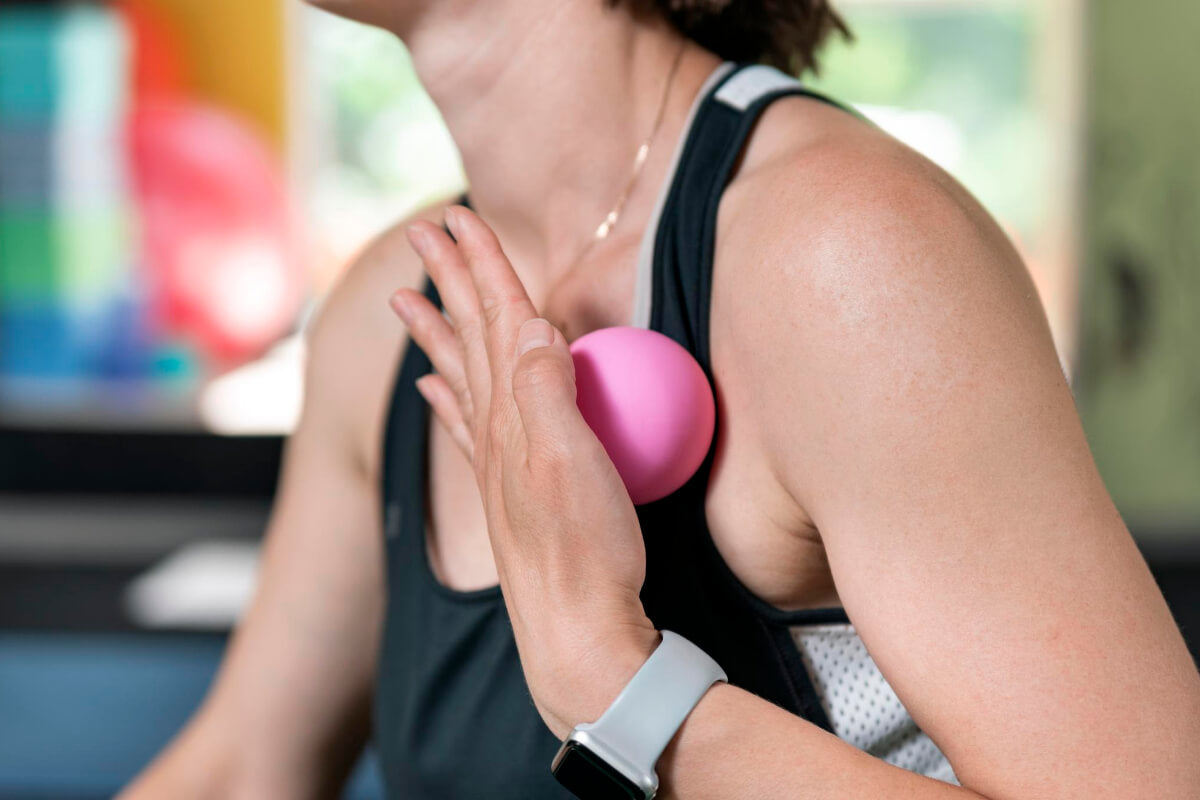
Fascial Manipulation
Fascia is a three-dimensional web of collagen and elastin fibers that wraps around every muscle, bone, and organ in the human body. When healthy, it is fluid and pliable; however, repetitive strain or inactivity causes the fascia to become "sticky" or dehydrated. This leads to adhesions that restrict movement and decrease power output. Myofascial release using a foam roller acts as a form of self-manual therapy, mimicking the effects of a sports massage.
In practice, consider a marathon runner dealing with lateral knee pain. Often, the issue isn't the knee itself, but a hyper-tonic Iliotibial (IT) Band pulling on the joint. By using deep compression techniques, the runner can modulate the nervous system to relax the surrounding musculature. Clinical studies, such as those published in the Journal of Sports Rehabilitation, indicate that just 60 seconds of rolling per muscle group can increase range of motion (ROM) by up to 10% without negatively impacting muscle strength.
Real-world data suggests that over 80% of musculoskeletal issues in office workers stem from fascial shortening in the hip flexors and thoracic spine. Utilizing a foam roller for just 5-10 minutes daily can counteract the physiological effects of an 8-hour seated workday by stimulating mechanoreceptors like the Golgi Tendon Organs (GTOs).
Tissue Mobilization
The most significant mistake users make is treating a foam roller like a rolling pin on dough. Speed is the enemy of effective myofascial release. When you roll too fast, the muscles instinctively tense up as a protective mechanism (the stretch reflex), which prevents the pressure from reaching the deeper fascial layers. This "superficial" rolling provides a temporary endorphin rush but fails to resolve underlying structural adhesions.
Another critical pain point is rolling directly on an inflamed area or a bony prominence. For instance, rolling directly over the site of acute lower back pain often exacerbates the issue by stressing the lumbar vertebrae. Instead, the focus should be on the "upstream" and "downstream" contributors, such as the glutes and the thoracic spine. Ignoring these connections leads to a cycle of chronic inflammation and localized bruising.
Finally, many people hold their breath during the process. Breath-holding signals a "fight or flight" response to the brain, which increases muscle tonus. Without rhythmic, diaphragmatic breathing, the tissue remains guarded, making the entire session counterproductive. This lack of neurological "buy-in" is why many people see no long-term progress in their flexibility despite daily rolling.
Evidence-Based Protocols
Selecting the Right Density for Your Neural Tolerance
The hardware matters as much as the technique. Beginners should start with a medium-density Ethylene Vinyl Acetate (EVA) roller, while advanced users require high-density Expanded Polypropylene (EPP) or "rumble" rollers with molded protrusions. Research shows that using a roller that is too hard can cause the body to "guard," while one that is too soft fails to reach the deep fascia. Brands like TriggerPoint or Rogue Fitness provide specific density ratings to help users match the tool to their pain threshold.
The "Search and Destroy" Method for Trigger Points
Instead of continuous movement, move at a pace of about one inch per second. When you find a "hot spot" (a point of significant tenderness), stop. Hold the pressure for 30–90 seconds while performing deep belly breaths. This sustained pressure triggers the autogenic inhibition reflex, allowing the muscle to finally "melt" under the roller. In clinical settings, this technique has shown a 15% improvement in localized blood flow within minutes.
Implementing Multi-Planar Mobilization
Fascia doesn't just run up and down; it's a multi-directional lattice. Once you are on a tender spot, incorporate "tack and stretch" or "cross-friction" movements. For the quadriceps, this means stopping the roller and bending your knee (tack and stretch) or shifting your hips side-to-side (cross-friction). This shears the fascial layers apart, providing a much deeper release than standard linear rolling.
Optimizing Post-Rolling Rehydration
The mechanical pressure of rolling squeezes metabolic waste and stagnant fluid out of the tissue. To see lasting results, you must replace this with fresh, nutrient-rich fluid. Drinking electrolyte-enriched water (using products like Liquid I.V. or LMNT) immediately after a session is crucial. Practitioners who hydrate properly post-rolling report 30% less muscle soreness the following day compared to those who do not.
Targeting the Thoracic Extension for Posture Correction
For those with "Tech Neck," the roller should be placed horizontally across the mid-back. By supporting the head and gently arching back over the roller, you mobilize the thoracic vertebrae. This counteracts the kyphotic (slumped) posture. Data from ergonomic studies suggests that improving thoracic mobility can reduce neck strain complaints by nearly 40% in desk-bound populations.
Managing the "Upstream" Tightness of the Posterior Chain
Lower back pain is frequently a symptom of tight hamstrings and calves. Using a roller to release the gastrocnemius and soleus (calf muscles) takes the tension off the sciatic nerve path. Experts recommend using a smaller, firmer tool like a Theragun or a lacrosse ball for these specific areas to complement the broad pressure of the foam roller.
Performance Outcomes
A mid-sized logistics company implemented a "Mobility Minute" program for its warehouse staff, who were suffering from high rates of repetitive strain injuries (RSIs). They provided high-density rollers and ten-minute training sessions focused on the glutes and plantar fascia. Within six months, the company reported a 22% decrease in reported lower back injuries and a significant uptick in employee morale.
In a professional setting, a Division I collegiate basketball team integrated foam rolling into their pre-practice warm-up and post-game recovery. By focusing specifically on the hip adductors and lateral quads, the team saw a 15% reduction in non-contact groin strains over the course of a season. The use of recovery tracking apps like Whoop confirmed that athletes who rolled consistently had higher Heart Rate Variability (HRV) scores, indicating better autonomic nervous system recovery.
Implementation Checklist
| Step | Action Item | Technical Focus |
|---|---|---|
| 1 | Hydration Baseline | Consume 500ml of water with electrolytes 30 mins prior. |
| 2 | Global Scan | Roll the entire muscle group quickly to find sensitive zones. |
| 3 | Specific Release | Spend 60 seconds on identified "hot spots" with deep breathing. |
| 4 | Active Range | Perform 5–10 joint rotations (e.g., ankle circles) after rolling. |
| 5 | Frequency | Aim for 3–5 sessions per week for permanent tissue change. |
Improper Technique Hazards
The most dangerous error is rolling through intense, sharp pain. There is a "good pain" (therapeutic discomfort) and "bad pain" (nerve impingement or structural damage). If you feel numbness, tingling, or a "zinging" sensation, you are likely compressing a nerve. Stop immediately and move the roller to a different location. Nerve tissue does not respond well to direct mechanical compression.
Additionally, avoid rolling the lower back (lumbar spine) with a traditional large roller. The lumbar vertebrae lack the structural support of the rib cage, and the pressure can force the spine into excessive extension, potentially irritating the facet joints or discs. For lower back relief, focus on rolling the gluteus maximus and the piriformis instead, as these are usually the "tight" culprits pulling on the pelvis.
FAQ
How long should I spend on each muscle group?
Consistency is more important than duration. Spend roughly 90 seconds to 2 minutes per muscle group. Research indicates that after two minutes, you reach a point of diminishing returns for acute ROM improvements.
Should I roll before or after a workout?
Both have benefits. Pre-workout rolling (dynamic) focuses on "waking up" the nervous system and improving blood flow. Post-workout rolling (static/slow) focuses on down-regulating the nervous system and clearing metabolic byproducts.
Can foam rolling help with cellulite?
While foam rolling can temporarily increase blood flow and reduce local edema (fluid retention), which may make skin look smoother for a few hours, it cannot permanently "break down" fat cells or cure cellulite. It is a tool for mobility, not aesthetic fat loss.
Is it normal to have bruises after rolling?
Occasional light bruising can occur if your fascia is extremely dense or if you have fragile capillaries. However, frequent or deep bruising is a sign of too much pressure or poor tissue health. Lighten the load by using your arms/legs to offload some of your body weight.
What is the difference between a smooth and a textured roller?
Smooth rollers provide even pressure and are best for general recovery and beginners. Textured rollers (like the Grid) provide a more "kneading" sensation, which can be more effective for breaking up localized adhesions in thicker muscles like the lats or hamstrings.
Author’s Insight
In my years working with both athletes and desk-bound clients, I’ve found that the foam roller is often the most misused tool in the gym. People approach it with a "no pain, no gain" mentality, but the fascia is a sensory organ that responds better to "invitation" than "aggression." My best advice is to treat your rolling session as a form of mindfulness; if you can't maintain a steady, calm breath, the pressure is too high. Dial it back, focus on the exhale, and let the tool do the work—your mobility will improve much faster when your brain isn't fighting the roller.
Summary
Myofascial release via foam rolling is a highly effective, low-cost intervention for improving mobility and reducing muscle soreness. To see real results, prioritize slow, deliberate movements, maintain proper hydration, and avoid rolling directly on joints or the lumbar spine. Integrate these techniques into your daily routine to transition from temporary relief to long-term structural health. Start by focusing on your most restricted area today—whether it's your hips or your upper back—and apply the "Search and Destroy" method for immediate functional gains.