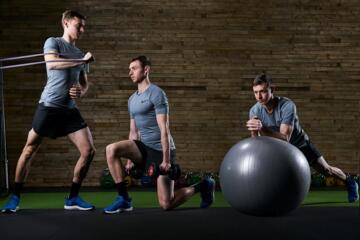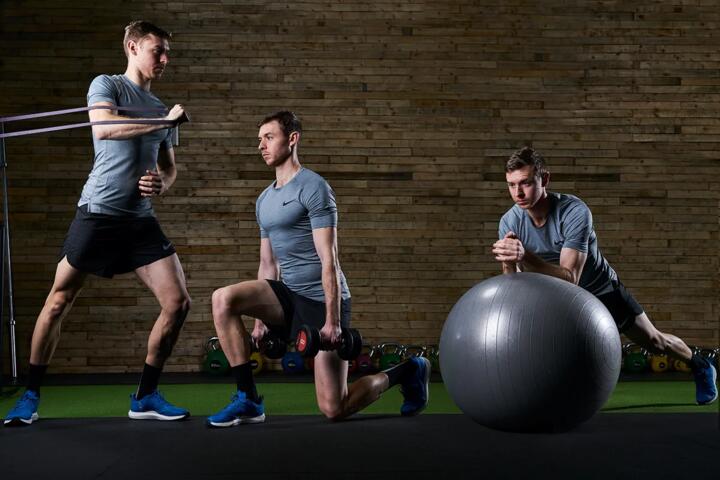
Cross-Training And Fitness
Cross-training is a training approach that combines multiple exercise types to reach fitness goals. Instead of running every day, for example, a person might alternate running with cycling and strength training. The goal is not to “do everything,” but to distribute training stress across different muscle groups and movement patterns while keeping overall weekly workload high enough to drive adaptation.
Different modalities stress the body in different ways. Running emphasizes impact forces and hip-knee-ankle loading, cycling shifts load toward the hips and knees with less ground impact, and swimming adds resistance through water drag while reducing joint compression. Strength training adds progressive overload to muscles and connective tissues, which endurance-only training often under-stimulates.
Cross-training also changes how you recover. When the same joints and tissues are loaded repeatedly, micro-injuries can accumulate faster than they heal. Rotating activities can reduce repetitive strain while still training the cardiovascular system and maintaining movement skill.
Common Mistakes And Costs
A frequent mistake is treating cross-training as random variety. Switching activities without tracking intensity and total weekly effort can lead to two problems: undertraining (not enough stimulus) or overreaching (too much fatigue). The body adapts to a dose of training stress, not to the number of different workouts.
Another mistake is ignoring specificity. If your goal is a 5K race, replacing most running with non-impact cardio can slow running economy and reduce practice of the exact mechanics used at race pace. Cross-training works best when it complements the primary activity rather than replacing it entirely.
People also misjudge injury risk. Overuse injuries often involve tendon and joint tissues that tolerate load up to a threshold. Repeating the same pattern—like long runs on consecutive days—can push tissues beyond that threshold. Cross-training can lower repetitive load, but it does not remove risk if intensity spikes or if a new activity introduces a different overuse pattern.
Biologically, cross-training can improve fitness through several pathways. Aerobic conditioning depends on sustained work that challenges oxygen delivery and utilization. Different modalities can reach similar heart-rate and oxygen-demand ranges, so cardiovascular adaptations can still occur. Strength and power adaptations depend on progressive resistance and movement patterns; adding resistance training can improve force production and joint stability, which may reduce compensations during endurance work.
In real life, the consequences of poor planning show up as persistent soreness, declining performance, sleep disruption from fatigue, and recurring pain in the same anatomical region. A person may also notice that they feel “busy” but do not improve because total effective training stimulus stays too low or too erratic.
How To Build A Plan
Match Intensity To Goals
Start by defining what you want to improve: aerobic endurance, muscular strength, speed, or body composition. Then assign intensity levels across the week. A practical approach is to keep most sessions in a moderate zone where you can sustain effort, and reserve harder work for fewer days.
In practice, a runner might do two easy runs, one interval session, one strength session, and one low-impact cardio session such as cycling or rowing. The low-impact day can be at a moderate effort to maintain aerobic stimulus while reducing impact on tissues that are already stressed by running.
Tools that help include a heart-rate monitor, perceived exertion (for example, rating effort from 1 to 10), and a simple log of duration and intensity. If you cannot track intensity, you can still use a consistent rule: hard days should feel meaningfully harder than easy days, and easy days should not leave you exhausted.
Realistic outcome expectations depend on baseline fitness and consistency. Many people notice improved stamina within 4–8 weeks when weekly training volume and intensity are managed, while strength changes often require 6–12 weeks of progressive resistance work.
Rotate Modalities With Purpose
Choose cross-training activities that complement your main sport or routine. If impact is the limiting factor, cycling, swimming, and elliptical training can reduce ground reaction forces. If your limitation is muscular endurance, rowing, stair climbing, or circuit-style strength work can add resistance while still varying movement patterns.
Rotation should also consider joint mechanics. For example, some people find that deep knee flexion during cycling causes discomfort, while others tolerate it well. Similarly, swimming can aggravate shoulder issues for some swimmers if technique is poor. The best modality is the one that you can perform with good form at the intended intensity.
A practical template is to keep one primary activity for skill and specificity, add one or two complementary cardio sessions, and include at least one resistance-focused session. Over time, you can swap complementary cardio types to reduce repetitive strain.
When switching modalities, keep the first few sessions conservative. A new movement pattern can feel easier or harder than expected, and tendons and muscles need time to adapt to the new loading.
Use Strength To Support Movement
Cross-training often fails when it only changes cardio machines and neglects muscle capacity. Strength training can improve force production and control, which helps endurance athletes maintain technique under fatigue. It also increases the body’s ability to tolerate training loads by strengthening muscles and supporting connective tissues.
In practice, a full-body routine performed 2–3 times per week can cover major movement patterns: squatting or hip-hinging, pushing, pulling, and carrying or core work. Exercises can be bodyweight, free weights, resistance bands, or machines. The key is progressive overload through gradual increases in resistance, repetitions, or total sets.
Realistic numbers: many beginners start with 2–3 sets of 6–12 repetitions for each major movement pattern, leaving 1–3 repetitions “in reserve” on most sets. Progression can be slow; adding weight or reps gradually reduces the chance of soreness derailing cardio training.
Strength sessions also help cross-training by reducing compensations. For example, better hip control can reduce excessive knee collapse during running, which may lower stress on tendons.
Manage Recovery And Volume
Cross-training changes fatigue distribution, but it does not remove fatigue. Total weekly volume and intensity still determine adaptation. A common rule is to increase training load gradually, often by small weekly increments rather than large jumps.
Recovery can be monitored through sleep quality, resting heart rate trends (if you track them), and how quickly you return to baseline after hard sessions. If performance drops for multiple weeks or soreness lingers, the plan likely needs adjustment.
In practice, you can schedule cross-training to “absorb” stress. For instance, after a hard interval day, choose a moderate cycling or swimming session the next day instead of another high-impact workout. This keeps aerobic work in the week while giving impact-loaded tissues time to recover.
Realistic outcomes depend on consistent recovery. Many people can train 3–6 days per week with cross-training while maintaining steady progress, but the exact number varies with age, sleep, work demands, and baseline fitness.
Educational Case Examples
Case 1: Runner With Shin Pain History
A 32-year-old runs three times per week and adds a fourth day of cycling. The plan keeps one run easy, one run moderate, and one run with intervals. Cycling replaces one of the impact days, and strength training focuses on calf capacity, hip hinge mechanics, and single-leg stability. Over several weeks, the person reports fewer flare-ups and steadier run pace because weekly impact exposure drops while aerobic conditioning remains.
Case 2: Desk Worker Seeking Better Stamina
A 45-year-old who sits most of the day starts with brisk walking and adds rowing twice per week plus two short strength sessions. The rowing workouts are kept at moderate effort, while walking covers longer time at low intensity. After 6–8 weeks, the person notices improved ability to sustain activity without breathlessness and better tolerance for stairs, while strength work reduces the feeling of stiffness after sitting.
Cross-Training Checklist
| Decision Point | If You Choose This | What To Watch | Practical Next Step |
|---|---|---|---|
| Primary Goal | Endurance for a sport | Too much replacement can reduce skill practice | Keep at least one weekly session in the main sport |
| Joint Stress | Impact is limiting | New motions can create new overuse | Start the new modality at lower intensity for 1–2 weeks |
| Training Dose | Most sessions are moderate | Hard days may be too frequent | Limit hard intervals to 1 day per week at first |
| Muscle Support | Strength is included | Excessive soreness can disrupt cardio | Use moderate loads and progress slowly |
Step-by-step checklist
- Pick one main activity that matches your goal and keep it in the plan each week.
- Add one complementary cardio modality that reduces the limiting stress (often impact or repetitive joint loading).
- Include 1–3 resistance sessions per week with progressive overload.
- Keep most sessions moderate; schedule harder work sparingly.
- Track duration and perceived effort, then adjust volume if fatigue accumulates.
Common Mistakes To Avoid
Cross-training can backfire when people increase total weekly time without reducing intensity elsewhere. If you add a new workout on top of the existing schedule, the body may not recover even if the new activity is lower impact.
Another mistake is ignoring technique. Cycling cadence, rowing stroke mechanics, and swimming arm patterns all affect joint loading. Poor form can shift stress to tendons and shoulders, creating a new pain site.
People also underestimate how strength training interacts with cardio. Heavy leg days can reduce running or cycling performance for several days. Planning strength sessions on days that do not require peak cardio output can reduce conflict.
Finally, some people stop cross-training after a few weeks because the benefits are not immediate. Aerobic adaptations and tendon remodeling take time, so a short trial without tracking effort and recovery can lead to premature conclusions.
FAQ
How Often Should I Cross-Train?
Many people benefit from cross-training 1–3 days per week, depending on their main activity and recovery. A common starting point is to keep the primary sport 2–4 days weekly and use 1–2 additional days for complementary cardio or mobility-focused work.
Does Cross-Training Replace Running?
Cross-training can reduce impact and repetitive strain, but replacing all running removes practice of running mechanics and race-specific conditioning. A balanced plan keeps at least one running session weekly while using other modalities to manage fatigue.
Will Cross-Training Improve Speed?
Speed depends on training that targets neuromuscular power and specific energy demands. Cross-training can support aerobic fitness and recovery, but it does not automatically replace interval or strength work needed for faster running or cycling.
Can Cross-Training Reduce Injury Risk?
Cross-training can lower repetitive loading on specific tissues by varying movement patterns. Injury risk still depends on total training dose, technique, and how quickly intensity changes; a new modality can also cause overuse if introduced too aggressively.
What If I Feel Sore After New Workouts?
Soreness is common when introducing a new movement pattern. If soreness is mild and improves within 48–72 hours, it often reflects normal adaptation. If pain is sharp, worsens during the session, or persists beyond a few days, the plan likely needs adjustment.
Author's Insight
Cross-training adds fitness by distributing training stress across different tissues while maintaining aerobic stimulus and improving muscular support through resistance work. The strongest practical advantage is often reduced repetitive strain, which can help people stay consistent with training. The main limitation is that variety does not replace training dose: intensity, volume, and recovery still determine adaptation. A plan that keeps one primary activity for specificity, adds complementary cardio to reduce limiting stress, and includes progressive strength work tends to be more durable than random switching.
Key Takeaways
- Cross-training varies movement patterns to reduce repetitive joint and tendon loading while keeping aerobic conditioning active.
- Fitness gains depend on training dose and recovery, not on the number of different workouts.
- Use complementary cardio to manage the limiting stress, and keep at least one session in the main activity for specificity.
- Include progressive resistance training to support movement control and improve tolerance to training.
- Track effort and fatigue, then adjust volume if soreness or performance declines persist.