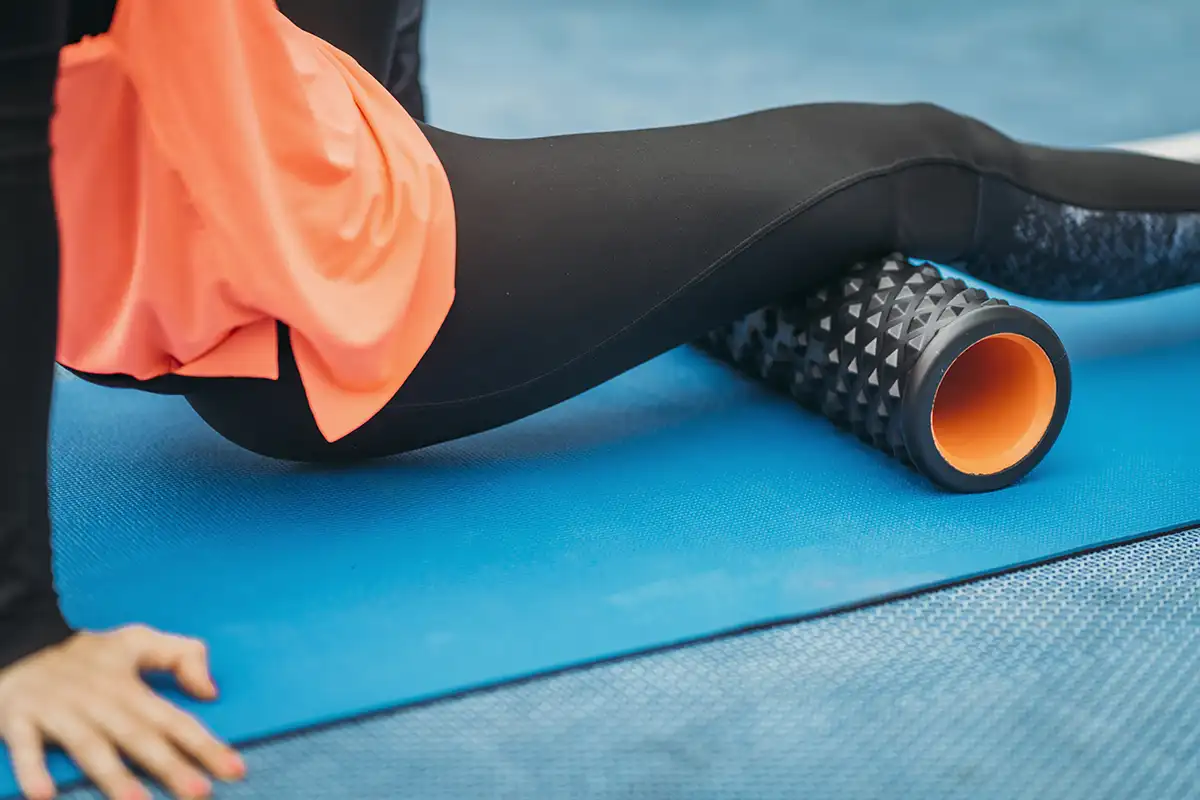
Foam Rolling Basics
Foam rolling uses a cylindrical foam tool to apply pressure to muscles and connective tissues while you move your body over it. People often use it before exercise to “warm up,” after exercise to “recover,” or between workouts to manage perceived tightness.
Foam rolling does not directly “break up” fat or permanently change joint structure. The most consistent effects reported in the literature relate to short-term changes in sensation, muscle stiffness, and range of motion, which can influence how a person feels and moves during the next minutes to hours.
In practice, foam rolling is closer to a form of mechanical pressure plus movement than to a targeted treatment for a specific diagnosis. That distinction matters because it helps explain why the same routine can feel helpful for one person and irritating for another.
What People Get Wrong
Many people treat foam rolling as a way to “fix” tight muscles permanently. Muscles adapt to training, sleep, and load exposure; foam rolling mainly changes how the nervous system and soft tissues respond in the short term.
Another common misunderstanding is that pain during rolling means the technique is working. Pain can reflect pressure sensitivity, irritated tissue, or nerve involvement. High discomfort can lead to guarding, altered movement patterns, and a worse experience during training.
Foam rolling can change range of motion through multiple pathways. Mechanical pressure may reduce perceived muscle stiffness by affecting sensory input from skin, fascia, and muscle spindles. It can also modulate pain signaling through descending pathways and local sensory gating, which may make movement feel easier even if tissue properties change only modestly.
Real-world consequences of overdoing foam rolling include increased soreness, flare-ups of tendon or joint irritation, and delayed recovery when sessions are too frequent or too intense. People who roll over bony areas, directly over joints, or through acute injury often report worse symptoms.
Timing also matters. If you roll aggressively right before a power-focused workout, some people experience reduced performance, likely due to temporary changes in muscle activation or discomfort-driven movement changes. If you roll gently after, the effect may be more about comfort and mobility than performance.
How Foam Rolling Helps
Reduce Perceived Tightness
Foam rolling may lower the sensation of tightness by changing sensory input from the tissues you press. When pressure is applied, nerve endings in the skin and deeper tissues send signals to the spinal cord and brain, which can alter how strongly the body “protects” the area during movement.
What to do: choose a muscle group you can reach comfortably, then apply pressure that feels like firm but tolerable discomfort. Aim for a sensation that stays within a “workable” range rather than sharp or escalating pain.
What it looks like: for example, rolling the upper back against the floor with knees bent can feel like pressure on the muscles around the shoulder blades. Rolling the calf can feel like a deep stretch sensation along the muscle belly.
Practical numbers: many people start with 30–60 seconds per area, repeating 1–2 rounds. If you notice symptom worsening later the same day or the next day, reduce pressure or shorten the session.
Improve Short-Term Range Of Motion
Some people experience a temporary increase in range of motion after foam rolling. This effect is often linked to reduced perceived stiffness and improved tolerance of movement, rather than a permanent change in tissue length.
What to do: pair rolling with a gentle mobility movement immediately after. The goal is to translate the “easier movement” sensation into actual movement practice.
What it looks like: after rolling the hip flexors or quadriceps, perform controlled hip extensions or lunges within a comfortable range. After rolling the thoracic spine, practice shoulder blade retraction or thoracic extension movements.
Practical numbers: try 1–2 minutes total rolling for the target area, then do 2–3 sets of light mobility movements. If you feel unstable, numb, or radiating pain, stop and reassess technique and pressure.
Manage Discomfort After Activity
Foam rolling after exercise may help some people feel less sore or more comfortable by modulating pain signals and improving local circulation sensation. Evidence for accelerating muscle recovery is mixed, and foam rolling should not replace rest, nutrition, and progressive training.
What to do: use lower pressure after workouts, focusing on comfort and breathing rather than forcing deep pain. Avoid rolling directly over areas that are clearly inflamed, bruised, or acutely tender.
What it looks like: after a run, rolling the calves and quadriceps gently for short intervals can feel like “resetting” the sensation in the muscles. The session should leave you feeling better, not more irritated.
Practical numbers: start with 30–45 seconds per area, 1 round, and reassess the next day. If soreness increases, reduce frequency (for example, from daily to every other day) or reduce pressure.
Use It As A Training Adjunct
Foam rolling can fit into a routine as a supplement to warm-up and mobility work. It works best when it supports movement quality rather than replacing it.
What to do: treat foam rolling as a prelude to dynamic warm-up or post-workout mobility. Keep the intensity consistent and avoid “chasing” pain.
What it looks like: before a workout, do light rolling for 1–2 minutes per major area, then follow with dynamic movements such as leg swings, bodyweight squats, or arm circles. After training, do gentle rolling plus mobility and stretching within comfort.
Practical numbers: many people do 3–6 total minutes per session. If you spend 20–30 minutes rolling, the risk of irritation and diminishing returns rises.
Educational Case Examples
Desk worker with hip tightness: A person who sits long hours reports stiffness in the front of the hips. They roll the hip flexors and quads gently for 45 seconds per area, once after work, then do controlled hip extensions. Over several weeks, they notice easier standing up and less “stuck” feeling, while maintaining their usual walking and stretching routine. They avoid rolling directly over the front of the hip joint and stop if symptoms become sharp.
Runner managing post-run soreness: A runner uses foam rolling after easy runs at low pressure, focusing on calves and hamstrings for about 1 minute total per muscle group. They keep discomfort at a tolerable level and avoid rolling over a focal area that feels like a tendon spot. After a week, they report better comfort during the next morning warm-up, while recognizing that heavy training days still produce soreness that requires normal recovery.
Foam Rolling Checklist
| Goal | Typical Approach | What You Should Feel | When To Stop |
|---|---|---|---|
| Short-term mobility | 1–2 minutes per target area, then gentle mobility | Firm pressure, mild discomfort, movement feels easier | Sharp pain, numbness, tingling, or symptoms that worsen later |
| Post-workout comfort | Low pressure, 30–45 seconds per area, 1 round | Comforting “reset,” not escalating soreness | Increased soreness the next day or focal joint/tendon pain |
| Between workouts | Short sessions every other day; pair with movement | Less stiffness during daily activities | Persistent pain, bruising, or radiating symptoms |
Step-by-step safety checklist:
- Choose a muscle area you can reach without pressing directly on a joint line or bony prominence.
- Start with light-to-moderate pressure; increase only if symptoms improve and do not escalate.
- Roll slowly, spending more time on “tight-feeling” spots while keeping discomfort tolerable.
- Stop if you feel numbness, tingling, burning pain, or pain that radiates away from the rolled area.
- Reassess after 24 hours; if soreness increases, reduce pressure, shorten time, or reduce frequency.
Common Mistakes
Rolling directly over joints (such as the knee joint line) or over clearly irritated tendon areas can aggravate symptoms. Foam rolling should target muscle belly and surrounding soft tissue rather than compressing sensitive structures.
Using excessive force is another frequent error. People often equate “deep pain” with effectiveness, but high pressure can trigger protective muscle guarding and increase soreness.
Skipping the mobility component can also limit benefits. If rolling makes movement feel easier but you do not practice that range with controlled motion, the effect may fade quickly.
Overusing foam rolling can backfire. Daily, long, high-pressure sessions may irritate tissues and increase soreness, especially during periods of heavy training.
Ignoring symptom patterns is a safety issue. If pain becomes sharp, radiates, or comes with numbness or weakness, foam rolling is not the right tool to keep pushing through.
FAQ
How Long Should I Foam Roll?
Start with 30–60 seconds per target area, 1–2 rounds. If you feel worse later that day or the next day, shorten the time or reduce pressure.
Should Foam Rolling Hurt?
Firm discomfort can be normal, but sharp pain, burning sensations, numbness, tingling, or radiating pain are not expected. If those occur, stop and adjust pressure or technique.
Does Foam Rolling Replace Stretching?
Foam rolling and stretching affect different parts of the experience: rolling mainly changes sensory input and perceived stiffness, while stretching trains tolerance to lengthened positions. Many people benefit from using both in a short sequence.
Can Foam Rolling Help With Recovery?
Foam rolling may improve comfort and reduce perceived soreness for some people, but it does not replace rest and training load management. Evidence for accelerating tissue recovery is mixed, so expectations should stay modest.
Where Should I Not Roll?
Avoid rolling directly on joints, bony prominences, and areas that feel acutely inflamed or tender like a focal tendon spot. Stop if symptoms suggest nerve involvement.
Author's Insight
Foam rolling works mainly through mechanical pressure and movement that change sensory input from skin, fascia, and muscle. That sensory shift can temporarily reduce perceived stiffness and pain, which often improves range of motion and comfort during the next period.
Because effects vary across people and goals, the most useful approach is to treat foam rolling as a short adjunct to mobility and warm-up rather than a stand-alone solution. Consistent, tolerable sessions with attention to symptom response tend to be more informative than pushing intensity.
When discomfort escalates, radiates, or persists beyond the next day, the limiting factor is often irritation or nerve sensitivity rather than “tightness.” In those cases, reducing pressure, shortening sessions, or pausing is a reasonable first step.
Evidence supports short-term changes in comfort and movement for many users, while long-term tissue remodeling claims remain less certain and depend on overall training and recovery.
Key Takeaways
- Foam rolling most reliably changes how you feel and move in the short term, not permanently “fixing” tissue.
- Use tolerable pressure, avoid joints and bony areas, and stop for numbness, tingling, or radiating pain.
- Pair rolling with gentle mobility to translate improved comfort into movement practice.
- If soreness increases the next day, reduce intensity or frequency and reassess your routine.