Blue Light And Melatonin
Melatonin is produced by the pineal gland and rises in the evening to help coordinate circadian rhythms, including the timing of sleepiness. Light reaching the retina influences this system through specialized photoreceptors that are most sensitive to shorter wavelengths, including blue light.
In practical terms, a phone or tablet used in dim rooms can deliver enough short-wavelength light to delay melatonin onset. That delay does not mean melatonin disappears; it means the body’s “night signal” arrives later than it would with darker conditions.
Examples include reading on a bright screen after sunset, working late under LED lighting, or using a navigation app at night in a dark car. In each case, the combination of short-wavelength light and the timing relative to bedtime can shift the body clock.
Common Misunderstandings
Many people focus on total screen hours, but the circadian system responds strongly to when light is received. Two people can spend the same amount of time on screens, yet one uses them mostly during the day while the other uses them in the last one to two hours before sleep. The second pattern more often overlaps with the period when melatonin is naturally rising.
Another misunderstanding is treating “blue light” as a single, uniform exposure. Light sources differ in spectrum, brightness, and direction. A small bright display close to the eyes in a dark room can have a different effect than the same display used in a well-lit environment.
Biologically, the pathway runs from the retina to brain regions that regulate the suprachiasmatic nucleus, the body’s master clock. Short-wavelength light suppresses melatonin release and can delay its rise. The effect tends to be stronger when the eyes receive light directly and when ambient light is low.
People also assume that melatonin suppression automatically causes insomnia. Sleep depends on more than melatonin timing, including stress, caffeine, noise, temperature, and habits. Blue light can shift the timing signal, which may then make it harder to fall asleep at the desired clock time, but the outcome varies by person and context.
Real-world consequences show up as delayed sleep onset, later wake times, and a “wired but tired” feeling. Over time, repeated schedule shifts can contribute to circadian misalignment, especially for people who must wake early for work or school.
Reducing Evening Light Exposure
Dim And Move Screens Away
Lowering screen brightness and increasing distance reduces the retinal light reaching the eye. In practice, set brightness to the lowest comfortable level and avoid using screens in a completely dark room. If you need a dark room for comfort, add a small, indirect light source in the room so the screen is not the brightest object.
What it looks like: a laptop used at arm’s length rather than held close to the face, with brightness set to match the room. Many people notice that the screen feels less harsh while still remaining readable.
Relevant tools include built-in brightness controls, ambient light sensors on some devices, and simple lighting changes such as a bedside lamp or warm-toned overhead lighting.
Realistic outcome: you may not feel an immediate “melatonin reset,” but you can reduce the likelihood of melatonin onset shifting later when you use screens near bedtime.
Use Timing-Based Light Changes
Because melatonin timing is sensitive to light received in the evening, shifting the schedule often matters more than changing the color alone. A practical approach is to create a “light curfew” before sleep, such as reducing bright screen use in the final 60–120 minutes.
What it looks like: switching from interactive tasks to lower-light activities, such as reading paper, listening to audio, or doing a quiet routine that does not require a bright display.
Relevant methods include setting device schedules (some phones and tablets offer timed night modes) and using alarms to prompt a transition away from bright screens.
Realistic outcome: earlier dimming can reduce the chance that the body clock is pushed later, which may make it easier to fall asleep at the intended time.
Choose Filters With Realistic Expectations
Night mode settings and blue-light filtering can reduce short-wavelength output, but they do not remove light effects entirely. The impact depends on how much the spectrum shifts, the brightness level, and how close the screen is to the eyes.
What it looks like: enabling a warm color temperature setting in the evening while also lowering brightness and avoiding close viewing. If the screen remains very bright, the filter may not prevent melatonin suppression.
Relevant tools include device “night shift” features, browser extensions for dark themes, and screen protectors marketed for filtering. Evidence for filters varies by device and filter type, and results are not identical across studies.
Realistic outcome: filters can be one part of a broader plan, especially when you cannot avoid screen use in the evening.
Adjust Indoor Lighting Too
Even if screens are dimmed, bright overhead lighting can still contribute short-wavelength exposure. LED bulbs vary in spectrum; some emit more short-wavelength light than others. Using warmer, dimmer lighting in the evening can reduce overall retinal stimulation.
What it looks like: switching to a lower-lumen lamp in the living area during the last hour before bed, rather than relying on bright ceiling lights.
Relevant tools include smart bulbs with adjustable color temperature, dimmers, and choosing lamps that cast indirect light.
Realistic outcome: reducing room brightness can complement screen changes and help keep the screen from dominating the visual environment.
Case Examples
Late-Night Phone Use
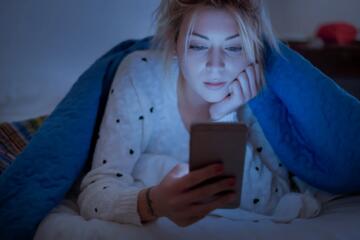
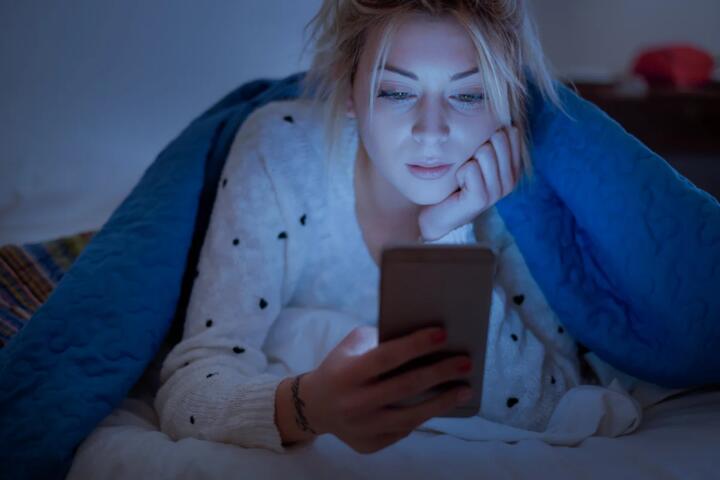
A 28-year-old works from home and scrolls on a phone for about 90 minutes after sunset in a dark bedroom. The person reports falling asleep later than desired and waking up groggy. They start dimming the phone to the lowest readable brightness, keep a small bedside lamp on, and stop phone use 60 minutes before bed by switching to audio and paper reading. Over several weeks, sleep onset shifts earlier, though the person still needs consistent bedtime routines to maintain the change.
Evening Work Under LEDs
A 42-year-old has evening tasks on a laptop and must finish work close to bedtime. They enable a timed night mode, lower brightness, and move the laptop farther from the face. They also replace bright overhead lighting with a warmer desk lamp during the final hour. The person notices less “wired” feeling at bedtime, but sleep timing still depends on workload stress and caffeine timing, showing that light is one factor among several.
Blue Light Vs Sleep Timing
| Decision Point | What To Do | Why It Matters | What To Expect |
|---|---|---|---|
| Screen use near bedtime | Reduce brightness and stop bright use 60–120 minutes before sleep when possible | Evening light can delay melatonin onset and shift circadian timing | Often gradual improvement in sleep onset timing |
| Room lighting | Use dimmer, warmer lamps in the evening | The visual environment influences retinal light exposure | Less “stimulating” light without changing sleep habits |
| Color filters | Use night mode as a supplement, not a substitute for dimming | Filters reduce short wavelengths but brightness and proximity still matter | Partial benefit when screen use cannot be avoided |
| Measuring success | Track bedtime, time to fall asleep, and wake time for 1–2 weeks | Sleep timing changes may be subtle and influenced by other factors | Clearer pattern recognition than relying on one night |
Common Mistakes
One mistake is using night mode while keeping brightness high. Warm color settings can reduce short wavelengths, but high luminance still delivers enough light to influence melatonin timing.
Another mistake is focusing only on the screen while ignoring the room. If overhead lights remain bright, the overall retinal stimulation can stay high even when the display is filtered.
People also underestimate how close the device is. Holding a phone near the face increases the light reaching the retina compared with using the same screen at a distance.
Some people change light habits for a few days and then judge results. Circadian timing shifts can take time, and sleep is affected by multiple variables, so short-term changes may not reflect the overall pattern.
Finally, some people assume that avoiding blue light alone fixes sleep. If caffeine is taken late, stress remains high, or the sleep schedule is inconsistent, melatonin timing changes may not translate into better sleep.
FAQ
Does Blue Light Always Stop Melatonin?
Blue light can suppress melatonin release and delay its rise, but it does not eliminate melatonin entirely. The effect depends on light intensity, spectrum, timing, and how directly the light reaches the eyes.
Are Night Mode Settings Enough?
Night mode can reduce short-wavelength output, but it often works best when paired with lower brightness and reduced proximity. If the screen stays very bright, melatonin timing can still shift.
How Long Before Bed Should I Reduce Screens?
A common practical target is 60–120 minutes before sleep, because evening light exposure overlaps with the period when melatonin naturally begins to rise. The best timing varies by person and schedule.
Does LED Room Lighting Affect Melatonin Too?
Yes. Indoor lighting contributes to retinal light exposure, and LED spectrum varies by bulb. Dimmer, warmer lighting in the evening generally reduces stimulation compared with bright overhead light.
Can Blue Light Cause Insomnia?
Blue light can contribute to delayed sleep onset by shifting melatonin timing, but insomnia has multiple causes. Sleep outcomes depend on stress, caffeine, noise, temperature, and consistent bedtime routines.
Author's Insight
Blue light affects melatonin through a well-described retinal pathway that links short-wavelength light to circadian timing. The most actionable takeaway is that timing and brightness matter more than the label “blue light” alone. Filters can help, but they work best when paired with dimmer lighting and earlier transitions away from bright screens. Sleep remains multi-factorial, so light changes often improve sleep timing gradually rather than producing immediate, dramatic effects.
Key Takeaways
- Evening blue-weighted light can delay melatonin onset, shifting circadian timing.
- Screen brightness, viewing distance, and room lighting influence the effect more than total screen hours.
- Reducing bright screen use 60–120 minutes before bed often helps, especially with dimmer, warmer indoor lighting.
- Night mode and filters can be useful, but they do not replace dimming and schedule changes.
- Track bedtime and sleep timing for 1–2 weeks to judge whether light changes are helping in your situation.