Screen Light and Sleep
Using a phone, tablet, or TV in the hour before bed can disrupt rest through several pathways: light exposure, mental stimulation, and changes to sleep timing. Light is the most direct mechanism. The retina contains melanopsin-sensitive cells that respond strongly to short-wavelength (blue-enriched) light and signal the brain to suppress melatonin, a hormone that helps coordinate sleep onset.
Laboratory studies have shown that exposure to bright light in the evening can reduce melatonin levels and shift circadian timing later. In one controlled experiment, participants exposed to evening light showed measurable melatonin suppression compared with dimmer conditions, with the effect depending on brightness and timing. In real life, screen brightness and proximity vary widely, so the impact can range from mild to substantial.
Screen content also matters. Scrolling, gaming, and emotionally engaging videos increase cognitive arousal, which raises alertness and delays the transition into sleep. Even when the screen is dim, the brain may remain “switched on” because attention is actively engaged.
Timing is another factor. Many people use screens late enough that the sleep drive is already high, yet the brain receives ongoing stimulation. That mismatch can lead to longer sleep latency (time to fall asleep) and fragmented sleep, especially when bedtime is inconsistent.
What People Get Wrong
A common mistake is assuming that “low brightness” or “night mode” fully removes the problem. Night mode typically reduces blue light, but it does not eliminate light exposure, and it does not address mental stimulation. A dim screen can still be bright enough to affect melatonin if it is close to the eyes and used for long periods.
Another error is treating sleep as a single event rather than a sequence. Sleep includes multiple cycles, and late-night stimulation can interfere with both falling asleep and staying asleep. People may notice they fall asleep eventually, then wake more often or feel less refreshed.
Many people also underestimate how quickly the brain adapts to a new schedule. If bedtime shifts later by even 30–60 minutes several nights in a row, circadian timing can drift. That drift can make earlier bedtimes feel harder even when screens are reduced.
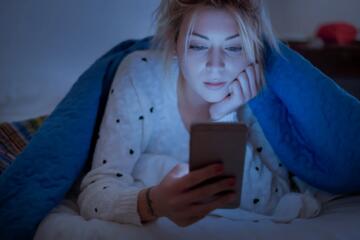
Real-world scenarios illustrate the pattern. A student who scrolls for 45 minutes after lying down may take longer to fall asleep and wake during the night. A parent who checks messages in bed may repeatedly break the sleep cycle, especially when notifications arrive.
Biologically, the sleep-wake system depends on coordinated signals: circadian cues from light and internal timing, plus sleep pressure that builds during wakefulness. Evening screen use adds both a circadian cue (light) and a behavioral cue (arousal), which can delay melatonin rise and keep the nervous system in a more alert state.
Reduce Disruption Stepwise
Set a screen cutoff
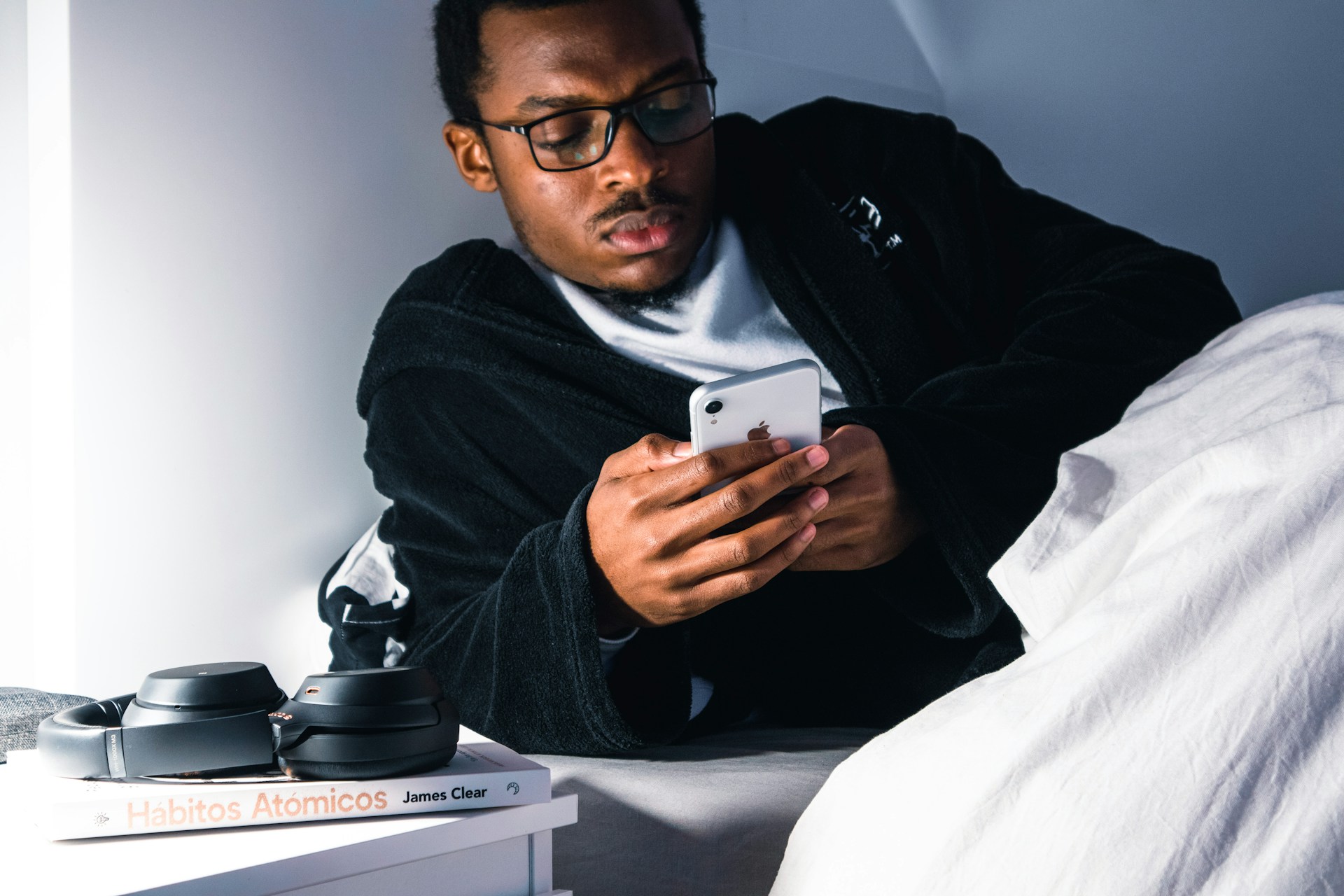
Choose a cutoff time before bed, such as 30–60 minutes without screens. This gives the brain time to downshift and allows melatonin to rise without competing light exposure. In practice, you can replace the last screen session with a low-stimulation routine like reading printed material, gentle stretching, or quiet listening.
What it looks like: your phone stays out of reach or on a charger in another room, and you plan the final “check” earlier in the evening. A realistic outcome is modest improvement in sleep onset for many people, with larger benefits for those who currently use screens right up to lights-out.
Tools and methods: use the phone’s “Do Not Disturb” schedule and set a reminder for the cutoff. If you share a device or rely on it for work, consider moving the final task to a fixed time and turning off notifications afterward.
Dim and distance the screen
If you cannot stop screen use entirely, reduce exposure by lowering brightness and increasing distance. Light intensity reaching the eyes depends on both screen brightness and how close the device is. Moving the screen farther away and using a dimmer setting can reduce the effective light dose.
What it looks like: you avoid using the phone in bed at arm’s length and instead use a larger screen at a greater distance during earlier evening hours. You also keep the room lighting low but not completely dark, since a very dark room plus a bright screen can increase perceived contrast.
Tools and methods: adjust brightness manually rather than relying only on night mode. Consider using a warm color temperature setting and keeping the device angled so the screen is not directly in your line of sight.
Use notification control
Notifications can fragment sleep by causing brief awakenings and reorienting attention. Even short interruptions can reduce sleep continuity, which matters because sleep cycles repeat across the night.
What it looks like: you schedule “Do Not Disturb” to cover your sleep window, allow only essential contacts, and silence non-urgent apps. If you need an alarm, set it through the clock app and keep the phone on the charger.
Tools and methods: configure app-level notification settings so social media and news alerts are off after a set time. For shared households, coordinate with others so urgent messages have a clear path without constant alerts.
Pick calmer content
Content choice affects arousal. Fast-paced games, social media feeds, and emotionally intense videos can keep attention engaged and delay sleep onset. In contrast, low-stimulation activities tend to reduce cognitive load.
What it looks like: you avoid scrolling feeds in bed and switch to something predictable and calm, such as a short audiobook, a slow-paced reading session, or a guided relaxation track. The goal is not “no thinking,” but fewer triggers for alertness.
Tools and methods: create a “pre-bed playlist” of calm media and keep it ready so you do not default to high-arousal content when you are tired.
Protect the wind-down routine
A consistent wind-down routine helps the brain associate a sequence of cues with sleep. When screens replace that routine, the cue becomes variable and the transition to sleep becomes harder.
What it looks like: you start a repeatable routine at the same time each night, such as dim lights, hygiene steps, and a set reading period. If you use screens earlier, you stop them before the routine begins.
Tools and methods: use a checklist on paper or in a notes app to reduce decision-making when you are tired. Keep the routine short enough to be repeatable, such as 20–30 minutes.
Manage light after waking
Screen exposure is not only a bedtime issue; morning light and timing shape circadian rhythm. If you wake and immediately use a bright screen in a dim morning environment, you may shift timing later and make the next night harder.
What it looks like: within the first hour after waking, get some outdoor light when possible and keep screen brightness moderate. If outdoor light is not feasible, use indoor lighting and avoid very bright screens.
Tools and methods: set morning brightness to a comfortable level and avoid “max brightness” habits. If you are adjusting schedules, keep wake time consistent to reduce circadian drift.
Track patterns, not perfection
Sleep improves when changes match your actual habits. Tracking helps you identify whether the main problem is falling asleep, staying asleep, or waking too early.
What it looks like: for 1–2 weeks, note bedtime, time screens were last used, number of awakenings, and perceived sleep quality. You can also record caffeine timing and alcohol use, since both affect sleep architecture.
Tools and methods: use a simple paper log or a phone note. If you use a wearable, treat it as a rough guide rather than a medical measurement.
Educational Case Examples
Late-night scrolling
A 22-year-old uses a phone for social media while lying in bed. After switching to a 45-minute screen cutoff and turning off non-urgent notifications, the person reports taking less time to fall asleep and fewer late-night awakenings. The improvement is gradual over several nights, and the person still needs a consistent bedtime to maintain the effect.
Work messages at bedtime
A 38-year-old checks work email on a tablet in bed because messages arrive unpredictably. The person sets “Do Not Disturb” for the sleep window and moves the final work check to an earlier time. Over the next week, sleep continuity improves, though the person notices that stress-related thoughts still delay sleep on some nights, showing that screen light is only one contributor.
Screen vs. Sleep Checklist
| Situation | Likely effect | What to try | What to watch for |
|---|---|---|---|
| Phone in bed within 30 min of lights-out | Longer time to fall asleep; possible lighter sleep | Use a screen cutoff; charge phone outside bedroom | Fewer minutes awake before sleep; fewer night awakenings |
| Night mode only | Melatonin suppression may lessen, but arousal remains | Combine warm mode with reduced brightness and earlier cutoff | Improvement in sleep onset without relying on “perfect” settings |
| Frequent notifications | Sleep fragmentation; attention reorientation | Schedule Do Not Disturb; silence non-urgent apps | Fewer awakenings; less “checking” behavior |
| High-arousal content | Delayed sleep onset from cognitive/physiologic arousal | Switch to calm media; avoid feeds in bed | Less mental “replay” when trying to sleep |
Common Mistakes
Relying on a single setting change is a frequent misstep. Night mode reduces blue-enriched light but does not remove light exposure or the mental stimulation from interactive content. People often need a combination of timing, brightness, and notification control.
Another mistake is moving screens earlier without changing the bedtime routine. If the wind-down still includes decision-making, scrolling, or checking messages, the brain may remain alert. A consistent sequence of cues works better than random “when I feel tired” screen use.
Some people try to “catch up” on sleep by sleeping in on weekends while keeping late-night screen habits. That pattern can worsen circadian mismatch and make Monday nights harder. Consistency in wake time often matters as much as bedtime.
Finally, people may ignore other contributors. Caffeine late in the day, alcohol close to bedtime, irregular schedules, and stress can all affect sleep. Screen changes can help, but they do not address every driver of insomnia-like symptoms.
FAQ
Does night mode fully fix it?
Night mode reduces blue-enriched light, but it does not eliminate light exposure or the mental stimulation from content. A screen cutoff and notification control usually address more of the problem than color temperature alone.
How long before bed should I stop screens?
A 30–60 minute cutoff is a practical starting point for many people. The effect depends on brightness, distance, and content, so some may need a longer buffer to notice a change.
Is e-reader light different from a phone?
Many e-readers use e-ink that reflects ambient light rather than emitting a bright backlight, which can reduce direct light exposure to the eyes. Still, reading content can be mentally engaging, and the device’s brightness and room lighting matter.
Can screens affect sleep even if I fall asleep quickly?
Yes. Evening light and arousal can influence sleep continuity, so you may fall asleep but still experience more awakenings or less restorative sleep. Tracking awakenings and next-day alertness can help clarify the pattern.
When should I talk to a clinician about sleep?
Consider professional advice if sleep problems persist for several weeks despite consistent behavioral changes, or if you have symptoms like loud snoring with pauses in breathing, severe daytime sleepiness, or insomnia that causes functional impairment.
Author's Insight
Screen use before bed disrupts sleep through two overlapping channels: light-driven circadian signaling and arousal-driven cognitive activation. Melatonin suppression has been demonstrated in controlled settings where evening light exposure is bright enough and timed close to bedtime, while real-world sleep disruption also reflects attention and stress from interactive content. The most practical approach is not a single “perfect” setting, but a coordinated plan: reduce exposure near bedtime, limit notifications, and keep a consistent wind-down routine. If sleep does not improve, other factors such as caffeine timing, stress, and breathing-related sleep disorders may be contributing.
Key Takeaways
To reduce screen-related sleep disruption, start with a screen cutoff 30–60 minutes before bed, dim and distance the device when you must use it, and silence non-urgent notifications during your sleep window. These steps target both light exposure and the arousal that delays sleep onset and fragments sleep. Expect gradual changes over days to a couple of weeks, especially if your bedtime schedule has been inconsistent.
Limits: screen changes may not resolve sleep problems driven by stress, caffeine, alcohol, irregular schedules, or breathing issues during sleep. Seek medical advice if insomnia persists despite consistent changes, if you experience severe daytime sleepiness, or if you have symptoms that suggest a sleep disorder beyond screen effects.