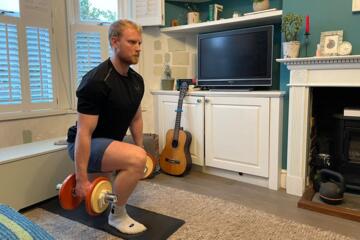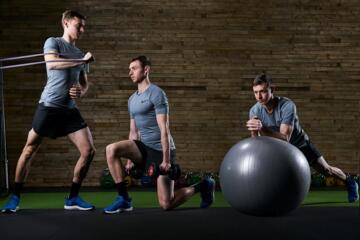
What Makes a Workout “Good”
A good workout for beginners is one that improves a specific fitness target while keeping technique safe and recovery realistic. For many people, that target is building basic strength, improving cardiorespiratory capacity, or increasing movement tolerance for daily activities.
Two evidence-based facts help frame this: adults are generally advised to do at least 150 minutes per week of moderate-intensity aerobic activity, and muscle-strengthening activities are recommended on 2 or more days per week. Those numbers come from public health guidance such as the World Health Organization and the U.S. Department of Health and Human Services.
A beginner’s first priority is not maximum effort. A session counts as “good” when it uses a manageable intensity, trains the body through a safe range of motion, and can be repeated across the week without persistent pain or excessive fatigue.
Practical examples clarify the idea. A 30-minute brisk walk at a pace that raises breathing but still allows conversation can be a good aerobic workout. A 25–40 minute routine with 6–10 controlled sets across major muscle groups can be a good strength workout when form stays consistent.
Workout quality also depends on how you respond afterward. Mild muscle soreness that fades within 24–48 hours can be normal after new training, but sharp pain, joint pain, or symptoms that worsen over days are not a sign of a “good” session.
Common Beginner Pain Points
Beginners often overestimate how much intensity they can tolerate. When sessions start too hard, the body adapts more slowly because recovery becomes the limiting factor. This can lead to a cycle of missed workouts, then restarting at the same high difficulty, then repeating the crash.
Another frequent issue is confusing “tiring” with “effective.” High fatigue can reduce movement quality, which increases the risk of technique breakdown. For example, squats performed with collapsing knees or a rounded back may feel challenging but can stress joints and tissues that are not ready for that load.
Many people also train the wrong bottleneck. If you can’t sustain moderate effort for 10–20 minutes, long high-intensity intervals may not be the first step. If you can’t perform basic movement patterns with control, heavy resistance training may not be the first step.
Biologically, beginners are adapting in multiple systems at once: muscles respond to mechanical loading, connective tissues adapt more slowly than muscle, and the cardiovascular system adapts to repeated aerobic stress. When the training stimulus exceeds recovery capacity, inflammation and soreness can rise, sleep can worsen, and motivation can drop.
Real-world situations show up quickly. A person who goes from no exercise to two long gym sessions in one week may feel fine during the workout, then experience delayed soreness that prevents normal walking or stair use. Another person may start a running plan and develop recurring shin or knee pain because the training volume increases faster than tissue tolerance.
How to Build a Good Routine
Start with a repeatable schedule
Choose a frequency you can maintain for at least 4 weeks. A common starting point is 2–3 days per week of aerobic work plus 2 days per week of strength training, with at least one rest or light-mobility day between harder sessions.
This works because adaptation depends on repeated exposure. If you can complete the plan week after week, you give muscles, tendons, and the cardiovascular system time to adjust.
In practice, you might schedule workouts on non-consecutive days, such as Monday/Wednesday for strength and Tuesday/Thursday for walking or cycling. If life interrupts one session, you resume rather than “catch up” by doubling the next one.
Tools that help include a calendar reminder, a simple workout log, and a rule like “no more than one hard day back-to-back.”
Realistic outcome: many beginners can build consistency within 2–3 weeks when the plan is modest enough to repeat.
Use an intensity you can control
For aerobic training, aim for moderate intensity most days. A practical method is the talk test: you should be able to speak short sentences, even if breathing is faster.
Moderate intensity supports cardiovascular adaptation while reducing the likelihood that you will need days of recovery. Very high intensity can be useful later, but it often overwhelms beginners’ recovery capacity.
In practice, start with 10–20 minutes of brisk walking, cycling, or an incline treadmill session, then add 2–5 minutes per workout as long as soreness and fatigue remain manageable.
Tools include a heart-rate monitor if you use one, but the talk test is often more accessible. If you track heart rate, focus on trends rather than chasing a specific number.
Realistic outcome: many people can raise total weekly aerobic time toward the 150-minute target by adding small increments rather than changing pace drastically.
Train strength with safe form
For strength, use exercises that you can perform with controlled technique. Beginners often do best with bodyweight or light-to-moderate resistance movements such as sit-to-stand, wall push-ups, supported rows, hip hinges with a dowel, and step-ups.
This works because strength training improves the ability to generate force and control movement. Controlled reps also reduce the chance that momentum replaces muscle work.
In practice, choose 4–6 exercises per session and perform 2–3 sets of 6–12 repetitions. Stop each set with about 1–3 repetitions “in reserve,” meaning you could do a few more reps with good form.
Tools include a mirror for alignment checks, a slow tempo (about 2 seconds down, 1 second up), and a simple “form checklist” for each exercise.
Realistic outcome: beginners commonly gain strength and better movement control within the first 4–8 weeks, even without heavy loads.
Progress using small steps
Progress should be gradual and measurable. For aerobic work, increase duration first, then pace. For strength, increase either repetitions or resistance in small increments while keeping the same exercise selection and technique.
This works because connective tissues and neuromuscular control adapt on different timelines. Jumping load or volume too quickly can increase overuse risk.
In practice, use a rule like: if you complete the session with the planned effort and no worsening joint pain, add a small amount next time. If soreness or fatigue is excessive, repeat the same level for another week.
Tools include a “progress log” with three columns: duration, reps, and perceived effort. Perceived effort can be tracked with a simple 1–10 scale.
Realistic outcome: a steady increase of about 5–10% per week in total training volume is a common starting framework, though individual tolerance varies.
Plan recovery as part of training
Recovery is not passive time; it is part of the training plan. Schedule at least 1 day per week with lighter activity, such as easy walking, gentle cycling, or mobility work.
This works because sleep, hydration, and nutrition influence muscle repair and nervous system recovery. Without adequate recovery, performance drops and injury risk rises.
In practice, use a simple decision rule: if pain is sharp or localized to a joint, reduce load or stop that movement and choose a different exercise pattern. If fatigue is generalized and sleep is poor, shift to a lighter session.
Tools include a sleep routine, a hydration habit, and a short daily check-in on soreness (0–10) and energy (0–10).
Realistic outcome: many beginners find they can train more consistently once they stop treating soreness as a reason to “push through” every time.
Warm up and cool down for quality
A warm-up prepares the body for movement by increasing blood flow and joint mobility. A beginner-friendly warm-up can be 5–8 minutes of easy movement plus 1–2 sets of the first exercise at a lighter effort.
This works because it improves readiness and helps you notice technique issues before you add effort. Cooling down with 3–5 minutes of easy movement can help you transition out of the workout.
In practice, before strength training, do a few bodyweight reps of the main movement and practice the range you will use in the working sets. Before walking, start with a slower pace for the first few minutes.
Tools include a timer and a checklist: “easy movement, then practice reps, then working sets.”
Realistic outcome: warm-ups often reduce the chance of feeling stiff or losing form during the first set.
Match the plan to your constraints
A good workout fits your time, equipment, and health limitations. If you have limited time, shorter sessions can still count when they include both aerobic and strength elements across the week.
This works because the weekly total and the quality of effort matter more than a single long session. Beginners benefit from training that matches their real schedule.
In practice, if you can only train 20–25 minutes, choose 3–4 strength exercises and 10–15 minutes of moderate walking. If you have joint sensitivity, select lower-impact aerobic options like cycling or swimming and use controlled ranges for strength.
Tools include a “minimum effective session” plan you can repeat on busy days.
Realistic outcome: consistency improves when the plan does not depend on perfect conditions.
Educational Case Examples
Case 1: Starting with walking and basic strength
A beginner who can walk comfortably but has not trained in years starts with 3 days per week of 20–25 minute brisk walking and 2 days per week of a short strength routine. Each strength session includes 5 exercises with 2 sets of 8–10 reps, stopping with 1–3 reps in reserve. After 3 weeks, they add 5 minutes to walking sessions and increase one strength exercise from 2 sets to 3 sets, while keeping joint discomfort at a low level.
The workout quality improves because intensity stays moderate, sessions remain repeatable, and progression is gradual rather than based on maximum effort.
Case 2: Gym start with form-first resistance
A beginner joins a gym and initially chooses machines and cables that support stable positions. They perform 4–6 exercises per session, 2 sets each, with controlled tempo and consistent technique. After two weeks, they add one extra set to the lower-body exercise and increase resistance slightly only when they can complete the planned reps without form breakdown.
The plan avoids the common problem of starting with heavy loads that cause technique collapse and lingering soreness that disrupts the next session.
Beginner Workout Checklist
| Decision point | Good sign | Concerning sign | What to do next |
|---|---|---|---|
| Aerobic effort | You can speak short sentences during the session | You can’t speak more than a few words or you feel wiped out for days | Slow the pace or shorten the session, then build duration |
| Strength technique | Form stays consistent across sets | You lose alignment, use momentum, or feel sharp joint pain | Reduce range, lower load, or switch to a simpler variation |
| Recovery | Soreness fades within 24–48 hours | Pain increases over 2–3 days or you can’t perform daily tasks | Take a lighter day and reassess exercise selection and volume |
| Weekly plan | You complete most planned sessions | You repeatedly skip workouts due to fatigue or pain | Reduce total volume and keep intensity moderate |
Common Mistakes to Avoid
Doing too much too soon is the most common error. A beginner who doubles weekly volume after a missed week often triggers delayed soreness and discouragement, which slows progress.
Skipping warm-ups can also backfire. Cold joints and stiff movement patterns can lead to poor mechanics during the first working set, especially for squats, lunges, and overhead movements.
Chasing “burn” sensations can push intensity beyond what the body can recover from. A workout that leaves you exhausted and unable to sleep well is not a reliable foundation for long-term training.
Ignoring pain signals is another mistake. Muscle soreness that fades is different from sharp or localized joint pain, numbness, or symptoms that radiate. Those patterns deserve attention and adjustment rather than repetition.
Training only one system can stall progress. If you only walk, strength and movement control may lag; if you only lift, aerobic capacity may remain low. A balanced weekly mix helps you build tolerance across daily activities.
FAQ
How long should a beginner workout last?
Many beginners start with 20–45 minutes per session. The best duration is the one you can repeat at a moderate effort level without persistent joint pain or severe fatigue that disrupts the next day.
How hard should I work during my first week?
Use a level where you can finish the planned reps or minutes with controlled form and a small margin left in reserve. For aerobic work, the talk test helps: you should be able to speak short sentences while breathing faster.
Do I need to lift weights to count strength training?
No. Strength training can include bodyweight exercises, resistance bands, or machines. The key is progressive resistance over time with controlled technique across major movement patterns.
Is soreness a sign that my workout was good?
Mild soreness that improves within 24–48 hours can occur when you start new training. Sharp pain, worsening symptoms over days, or pain that changes your movement pattern are not good signs.
How many days per week should I exercise?
A practical starting point is 3–5 days per week total, mixing aerobic and strength work. Consistency matters more than maximizing frequency, so choose a schedule you can maintain for at least a month.
Author's Insight
A “good workout” for beginners is best judged by repeatability and technique, not by how hard it feels in the moment. Public health targets for aerobic time and strength days provide a useful weekly framework, but beginners often reach those targets by adding small increments rather than changing intensity abruptly.
Strength and aerobic systems adapt on different timelines, and connective tissues typically lag behind muscle. That mismatch explains why gradual progression and recovery days often determine whether beginners stay consistent.
When you track effort and symptoms, you can adjust volume and exercise selection without abandoning training. If pain is sharp, persistent, or accompanied by concerning symptoms, professional medical evaluation is the safer next step.
Final Thoughts
A good beginner workout matches your current capacity, uses moderate intensity for aerobic work, and includes controlled strength training with a small margin in reserve. Progress comes from small, measurable increases in duration, reps, or resistance while keeping technique stable.
Benefits you can reasonably expect include improved movement control, better tolerance for daily activity, and gradual increases in aerobic capacity and strength over weeks. Limits exist: beginners can overdo it quickly, and recovery needs vary by sleep, stress, and prior activity level.
Next steps: choose a 4-week schedule you can repeat, start with 20–45 minute sessions, track soreness and energy, and adjust volume if symptoms linger beyond 48 hours. Seek medical advice before starting or escalating exercise if you have chest pain, unexplained shortness of breath, fainting, significant cardiovascular risk, or joint pain that does not improve with rest and technique changes.